"Will revive all the sugar mills!"
"Land will be arranged in all districts for setting up industries, and those providing more employment will be given land free of cost."
"Why not (invest in) Bihar?"
These are among the many pledges of Union and states ministers echoing across Bihar as election season approaches. They are back on the stump, offering visions of revival and jobs.
Once a major industrial hub of eastern India, Bihar now stands as a sobering tale of unrealised potential and faded fortunes. Factories that once buzzed with activity now lie silent, their rusting gates and abandoned floors a stark reminder of the state's industrial decline. While politicians criss-cross Bihar with fresh pledges as elections approach, for millions in the state, hope is as rare as a steady wage.
Sugarcane: From sweet success to sour decay
Bihar’s sugar industry produced close to 30 per cent of India’s sugar in the 1980s, spread across 28 functioning mills. Today, only nine mills remain operational.
While this sharp decline in the number of mills paints a grim picture, it is important to note that the total crushing capacity of these nine mills — 62,950 tonnes of cane per day (tcd) — collectively now exceeds the total capacity (34,123 tcd) when all 28 mills were running in earlier years. This increase is due to greater crushing capacity and modernised machinery in the surviving mills.
Today, Bihar’s overall share in India’s sugar production has fallen drastically to under six per cent, whereas states like Uttar Pradesh and Maharashtra have significantly ramped up their output.
Falling sugar prices, rising input costs, outdated equipment and inconsistent policy, coupled with low recovery rates and mounting farmer arrears, led to the closures of most of these mills, leaving both mill towns and cane farming families devastated.
Textiles: A silk legacy unravelling
Bhagalpur, still known as the ‘Silk City’, has a rich history as a centre for exquisite handwoven silk, prized in India and abroad. The city’s silk weaving tradition was recognised nationally when Bhagalpur silk received a Geographical Indication (GI) tag in 2013, highlighting its unique cultural and economic importance.
Today, however, the sector faces severe challenges. The handloom industry is battered by cheap imported synthetic fabrics, fierce competition from mechanised powerlooms, and rising silk prices that squeeze artisan margins. Successive governments have launched programmes like Silk Samagra to provide subsidies, skill training, and branding support. Yet, limited investment and weak marketing efforts, and cheaper alternatives mean many artisan families hover on the edge of survival.
A 2024 The Hindu report quoted Javed Saleh Ansari, chairperson of the Bhagalpur Regional Handloom Weavers Co-operative Union, as saying that annual business has shrunk from ₹600 crore in 2015 to just ₹150 crore today. Weavers now earn only ₹250-₹300 a day, with monthly incomes between ₹3,000 to ₹5,000 despite working 12–18 hours daily to produce a single silk saree, the report added.
This decline has forced many families to leave Bhagalpur in search of work in cities, threatening not only livelihoods but the survival of a centuries-old craft.
Paper: From pulp to paralysis
Bihar was once home to major paper mills, with Rohtas Industries in Dalmianagar and Ashok Paper Mills in Darbhanga being among the most prominent. These mills were significant employers in their regions, supplying paper across parts of India.
However, by the late 20th century, both mills were in steep decline. Shortages of raw materials like bamboo and sabai grass, high energy costs, unpaid dues, labour disputes and outdated machinery crippled operations. The Ashok Paper Mills, which had begun operations in the 1950s, had first shut down in the 1980s after years of sickness due to mounting debt and financial losses. It was followed by its privatisation and brief revival in the 1990s before formally shutting down in 2003.
According to a report by the Newsclick, the mill owed ₹2.5 crore to its workers between August 18, 1997 and December 31, 2002.
The impact was severe on local economies with thousands of workers left without livelihood.
What happens when local industries die?
Bihar’s shrinking industrial base has triggered one of the country’s largest waves of out-migration, reshaping the social and economic fabric of the state. According to a recent report by The Indian Express, over 7.45 million residents—equivalent to 7.2 per cent of Bihar’s population—have left their homes in search of work elsewhere, making Bihar the second highest source of internal migration after Uttar Pradesh.
Meanwhile, more than half of Bihar’s workforce continue to depend on agriculture, which remains largely seasonal and low-paying, while only 5.7 per cent of workers are engaged in manufacturing, according to a report by Niti Aayog. The low industrial employment is linked to the fact that the sector accounts for a mere 18.2 per cent of the Gross State Value Added (GSVA), sharply constraining economic growth. The state's per capita income stands at just around 30 per cent of the national average, reflecting limited opportunities and structural imbalances that push people to move to other states like Maharashtra, Karnataka, and cities like Delhi in search of stable livelihoods.
Will 2025 mark a turnaround?
Facing an election, Chief Minister Nitish Kumar-led Bihar government has announced a slew of schemes to attract investors to set up industries in the state, including double incentive amounts for new investors, free land for job-generating industries, and promised quick resolution of legal land disputes.
"Our government has set a target to provide jobs and employment to one crore youths in the next five years. The government is encouraging those setting up industries and pursuing self-employment in the State by providing various facilities," Kumar said in a post on X.
The state government has also rolled out the Bihar Industrial Investment Promotion Package (BIIPP) 2025, which provides benefits such as interest subsidies of up to ₹40 crore and reimbursement of State GST.
"We have moved forward from ‘why Bihar' to ‘why not Bihar' stage with the infrastructure developed in the last one decade. We have around 15,000 acres of land bank, export facility from Bihta dry port, better air connectivity, power supply and roads. The number of engineering colleges, polytechnics, and other institutions has increased," state industries minister Nitish Mishra said.
Similarly, Union Home Minister Amir Shah earlier this year said that the government is committed to reviving all 30 closed sugar mills in the state with full dedication and effort.
Union Finance Minister Nirmala Sitharaman also announced the establishment of a Makhana Board in Bihar to boost the production, processing, and marketing of makhana, also known as fox nuts. The board aims to support makhana cultivators in the state, who are responsible for producing approximately 90 per cent of India’s total makhana.
Food processing is another industry on the rise in Bihar. In December 2024, the state government secured investment agreements worth ₹2,181 crore in this sector, with the goal of generating over 4,000 new jobs. By February 2025, Bihar also had the highest number of Micro Food Processing Industry enterprises approved under the PM Formalization of Micro Food Processing Enterprises (PMFME) scheme.
With new developments, Bihar’s industrial revival faces a critical test. The state’s history is plagued with promises and plans that failed to materialise, leaving behind shuttered factories and displaced workers. The key question now is whether new initiatives can break this cycle of decline, or if the next government’s commitments will simply become another chapter in the story of Bihar’s lost industries.

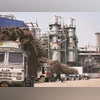 "Silk threads, sugar dreams: What remains of Bihar's industrial past")


 Connect with us on WhatsApp