
After helping BJP win Haryana, RSS 'tolis' shaping opinion in Maharashtra
Each team is holding small group meetings with 5-10 people and also reaching out to families through their local network
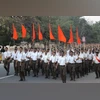 "After helping BJP win Haryana, RSS 'tolis' shaping opinion in Maharashtra")
Explore Business Standard

Associate Sponsors
Co-sponsor
Each team is holding small group meetings with 5-10 people and also reaching out to families through their local network
With the assembly polls in Maharashtra just a month away, the Rashtriya Swayamsevak Sangh (RSS) has launched an extensive outreach programme to shape public opinion in favour of the BJP-led alliance in the state.
The RSS, which is the ideological fountainhead of the Bharatiya Janata Party (BJP), has started the move in coordination with all of its affiliates, sources said.
"Tolis (teams) have been formed across the state and they have started reaching out to people in their respective localities taking the message," a source told PTI.
Each team is holding small group meetings with 5-10 people and also reaching out to families through their local network in 'mohallas' in their respective localities, the source said.
"In these meetings, they do not explicitly endorse the BJP but shape the people's opinion through intimate discussions around topics of national interest, Hindutva, good governance, development, public welfare and various local issues concerning the society," the source added.
Before the teams were formed, the office bearers of the RSS and its affiliates held coordination meetings across all levels in the state to devise the strategy, the source said.
The move assumes significance as it comes following the BJP's victory in the just concluded Haryana assembly polls.
Sources said the "drawing room meetings", held by the RSS in coordination with its affiliates across Haryana, were one of the key factors behind the BJP's electoral success in the state.
Bucking anti-incumbency, the BJP secured its best-ever haul of 48 seats in the 90-member Haryana state assembly pulling off a hat-trick of wins in the state to retain power and halt the Congress' comeback attempt in the elections.
"Tolis of Sangh workers, formed in Haryana, held over 1.25 lakh small group meetings across the state," another source told PTI.
ALSO READ: Maharashtra Assembly polls: Mahayuti, MVA race to announce seat-sharing
These meetings helped shape public opinion in Haryana by highlighting various issues including the erstwhile Congress government's "Jat-centric policies" under then Chief Minister Bhupinder Singh Hooda, the source said.
"They assuaged people's concerns over the Agnipath recruitment scheme. They also engaged with farmers and managed to sway their sentiments in favour of the BJP," the source said, adding "RSS stands out due to its embedded nature within the community, where its workers maintain long-term relationships and trust with people in their respective localities".
It is widely believed that a lack of enthusiasm among the RSS workers was one of the key factors behind the BJP's underwhelming performance in the Lok Sabha elections this year. BJP president JP Nadda's remarks during the parliamentary polls that his party needed RSS' support in the beginning but over the years it became capable of running itself, is understood to be one of the reasons that demotivated Sangh workers in various states.
According to sources, the RSS workers' "active participation" in shaping a favourable public opinion in the run-up to assembly polls has injected optimism in the BJP rank and file with many in the party hoping that replication of the Haryana strategy may yield favourable results in Maharashtra as well.
Although the RSS maintains that it does not directly engage in electoral politics, it has long been believed to be the BJP's hidden force in elections.
Stakes are high for the BJP and its allies in Maharashtra assembly polls scheduled to be held in one phase on November 20 with the opposition Maha Vikas Aghadi (MVA), comprising Congress, Shiv Sena (UBT) and NCP (SP), looking to wrest power from the ruling coalition, riding high on their success in the Lok Sabha polls this year.
The BJP suffered a setback in parliamentary elections in Maharashtra as its tally came down to nine from 23 it had won in the 2019 Lok Sabha polls in the state. Its ally Shiv Sena, led by Chief Minister Eknath Shinde, won seven seats. Another ally, the Ajit Pawar-led NCP bagged just one seat.
The Congress's tally went up to 13 from one seat in the 2019 Lok Sabha polls. Uddhav Thackeray-led Shiv Sena won nine seats and Sharad Pawar-led NCP eight.
First Published: Oct 20 2024 | 12:06 PM IST


