
Army Chief announces Rudra brigade, Bhairav battalion on 26th Kargil Diwas
He said the sanction for the brigade was approved just a day earlier, marking a significant step towards strengthening India's operational capabilities
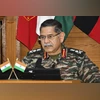 "Army Chief announces Rudra brigade, Bhairav battalion on 26th Kargil Diwas")
Explore Business Standard

Associate Sponsors
Co-sponsor
He said the sanction for the brigade was approved just a day earlier, marking a significant step towards strengthening India's operational capabilities
Chief of Army Staff General Upendra Dwivedi has announced the formation of a new "all-arms brigade" named 'Rudra' during his address at the Kargil War Memorial here on the occasion of the 26th Kargil Vijay Diwas on Saturday.
He said the sanction for the brigade was approved just a day earlier, marking a significant step towards strengthening India's operational capabilities.
"We are forming a new all-arms brigade under the name 'Rudra'. I approved its sanction just yesterday," said Gen Dwivedi.
He said that, "This brigade will integrate infantry, mechanised infantry, tanks, artillery units, special forces, and unmanned aerial systems into a single, cohesive combat formation, supported by dedicated logistics and combat support structures."
In a further strategic move, Gen Dwivedi also announced the creation of a cutting-edge special forces unit. "We are raising the 'Bhairav Light Commando Battalion', a highly lethal special forces formation designed to deliver surprise and shock to adversaries at the border. This unit will be equipped with advanced technologies and tactics tailored for high-impact operations."
Highlighting modernisation efforts across combat arms, Gen Dwivedi shared that, "Infantry battalions are now being enhanced with drone platoons, while the artillery units will be equipped with 'Divyastra' batteries and loitering munition batteries, significantly boosting the Army's strike capabilities."
Every year on July 26, India commemorates Kargil Vijay Diwas, a day etched in the nation's heart with pride and solemn remembrance. It marks the day in 1999 when India successfully concluded Operation Vijay, reclaiming the strategic heights from Pakistani intruders.
The Kargil War is a saga of strong political, military, and diplomatic actions. This war will always be remembered for its strategic and tactical surprises, as well as the self-imposed national strategy of restraint that kept the war limited to the Kargil-Siachen sectors and the swiftly executed tri-service military strategy.
The Kargil War lasted for more than 60 days and concluded on July 26, 1999, with a gallant victory for India. Indian armed forces successfully reclaimed the command of the high outposts that were treacherously occupied by Pakistani soldiers during the winter months.
According to IAF, Operation Safed Sagar, the Indian Air Force's codename for its air operations during the 1999 Kargil War, was a trailblazer in many ways and proved that air power could decisively alter the course of battle without crossing international boundaries.
The operation was launched on May 26, 1999, marking the first large-scale use of air power in Kashmir since 1971 and demonstrating the effectiveness of limited air asset use in a localised conflict.
(Only the headline and picture of this report may have been reworked by the Business Standard staff; the rest of the content is auto-generated from a syndicated feed.)
First Published: Jul 27 2025 | 6:53 AM IST

