
Era of uninterrupted dialogue with Pakistan over, says Jaishankar
Jaishankar said that there are strong people-to-people ties with Afghanistan
 "Era of uninterrupted dialogue with Pakistan over, says Jaishankar")
Explore Business Standard

Associate Sponsors
Co-sponsor
Jaishankar said that there are strong people-to-people ties with Afghanistan
External Affiar Minister S Jaishankar on Friday did some plainspeaking about India's relationship with its neighbour Pakistan.
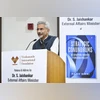
Speaking at the release of Ambassdor Rajiv Sikri's new book, "Strategic Conundrums: Reshaping India's Foreign Policy", the External Affairs minister said that the era of uninterrupted dialogue with Pakistan is 'over'.
"I think the era of uninterrupted dialogue with Pakistan is over. Actions have consequences. And insofar as Jammu and Kashmir is concerned, I think Article 370 is done. So the, the issue today is what kind of relationship can we possibly contemplate with Pakistan? Rajiv [Sikri] suggests [in his book] that perhaps India is content to continue at the current level of relationship. Maybe yes, maybe no... We are not passive. And whether events take a positive or a negative direction, either way, we will react to it," S Jaishankar said.
Jaishankar said that there are strong people-to-people ties with Afghanistan.
"Where Afghanistan is concerned, there are... strong people to people relations. There is actually, at a societal level, there is a certain goodwill for India. But as we look at Afghanistan, I think the basics of statecraft should not be forgotten. There are international relations at work here. So when we today review our afghan policy, I think we are very clear eyed about our interests. We are not confused by 'inherited wisdom' that is before us," he said.
The External Affairs Minister said that Afghanistan with the presence of American forces is very different from Afghanistan without the presence of America.
"We must appreciate that the Afghanistan with the presence of America for us is very different from the Afghanistan without the presence of America," Jaishankar said.
Jaishankar said that India has to find a ground of mutual interest with Bangladesh and India would deal with 'the government of the day'.
"Since Bangladesh's independence, our relationship has gone up and down, and it is natural that we will deal with the government of the day. But we also have to recognise that there are political changes, and they can be disruptive. And clearly here we have to look for mutuality of interest," Jaishankar said.
Talking about Myanmar, Jaishankar said that the context of Northeast is an overriding one.
"Going further east, there is Myanmar, which is both- relevant and remote at the same time. And here again, I think the northeast, the context of the Northeast or Northeast is the overriding one. And we... have to find a balance between the government and other stakeholders, because that is the reality," he said.
(Only the headline and picture of this report may have been reworked by the Business Standard staff; the rest of the content is auto-generated from a syndicated feed.)
First Published: Aug 30 2024 | 1:36 PM IST


