
Govt extends AFSPA in Manipur by another six months, with effect from Oct 1
In a notification, the state government's Home Department said the extension will come into effect from October 1
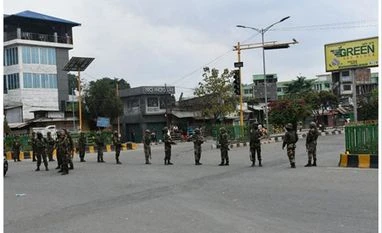 "Govt extends AFSPA in Manipur by another six months, with effect from Oct 1")
WebinarsNew
Deep DiveNew
Explore Business Standard
In a notification, the state government's Home Department said the extension will come into effect from October 1
The government on Monday extended the Armed Forces (Special Powers) Act (AFSPA) by another six months in Manipur excluding 19 police station areas falling under the Imphal valley and a region that shares its boundary with Assam.
In a notification, the state government's Home Department said the extension will come into effect from October 1.
"The state government is of the opinion after analysing the prevailing law and order situation in the state that it is not expedient to have a detailed assessment on the ground as security agencies are preoccupied with maintenance of law and order, the notification said.
The issue of declaration of Disturbed Area status is very sensitive and may likely attract public criticism and resistance if proper care is not taken, it said.
The governor of Manipur hereby accords approval to declare the entire state of Manipur excluding the areas falling under the jurisdiction of 19 police stations as Disturbed Area for a period of six months with effect from 1st October" the notification signed by Commissioner (Home) N Ashok Kumar read.
The police station areas where the Disturbed Areas have not been imposed include Imphal, Lamphel, City, Singjamei, Sekmai, Lamsang, Patsoi, Wangoi, Porompat, Heingang, Lamlai, Iribung, Leimakhong, Thoubal, Bishnupur, Nambol, Moirang, Kakching and Jiribam.
The areas that have been kept out of the purview of AFSPA are dominated by the majority Meitei community.
The Disturbed area tag was first withdrawn from the Imphal Municipality areas in 2004 and was removed from 15 police stations in six districts in April 2022.
The disturbed area was removed from other four police stations in April 2023.
The AFSPA gives sweeping powers to the armed forces operating in disturbed areas to search, arrest and open fire if they deem it necessary.
More than 200 people have been killed and thousands rendered homeless since ethnic violence between Meiteis and Kukis broke out in Manipur on May 3 last year.
Meiteis account for about 53 per cent of Manipur's population and live mostly in the Imphal valley, while tribals, including Nagas and Kukis, constitute 40 per cent and reside mostly in the hill districts.
(Only the headline and picture of this report may have been reworked by the Business Standard staff; the rest of the content is auto-generated from a syndicated feed.)
First Published: Sep 30 2024 | 5:52 PM IST


 Connect with us on WhatsApp