HAL to raise Tejas output as MiG-21 nears exit, but IAF shortfall to remain

Since being inducted in 1963, the MiG-21 has seen action in every major conflict involving India
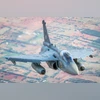
Caption: Indian Air Force's Light Combat Aircraft (LCA) Tejas Mk-I. Image Credit: PIB
Indian Air Force's Light Combat Aircraft (LCA) Tejas Mk-I. (Image Credit: PIB)
Bhaswar Kumar New Delhi
6 min read Last Updated : Sep 19 2025 | 6:05 AM IST

Don't want to miss the best from Business Standard?

With the Indian Air Force’s (IAF’s) combat strength set to fall to its lowest in six decades following the retirement of the MiG-21, Hindustan Aeronautics Limited (HAL) is working with private-sector partners to accelerate production of its replacement — the Light Combat Aircraft (LCA) Tejas Mark-1A (Mk1A). HAL aims to raise output from the current ceiling of 24 aircraft a year to 30 by the end of 2027, according to a source at the defence public-sector undertaking (DPSU).
 
Between October and December, HAL plans to deliver the first batch of Tejas Mk1As to the IAF — up to four jets, depending on steady supplies of F404-IN20 engines from US manufacturer GE Aerospace and the successful completion of weapon-firing trials, the source said. The original February 2024 target for starting deliveries was missed mainly due to delays in engine arrivals.
 
The IAF is at a critical juncture due to delayed inductions. The retirement of the last two MiG-21 Bison squadrons on September 26 will reduce its combat strength to 29 active fighter squadrons — the lowest in 60 years — against a sanctioned strength of 42.
 
“The MiG-21’s retirement will mark the end of a defining chapter for the IAF, as most senior pilots have flown the jet at some stage of their service,” a defence source said. “The IAF is still awaiting Mk1A deliveries, which are expected to fill the gap,” he added.
 
One Mk1A jet is already at HAL’s new production line in Nashik, Maharashtra. This third facility — together with the existing lines in Bengaluru — will eventually enable an annual output of 24 jets. However, in February, Air Chief Marshal A P Singh said the IAF needed 35–40 fighters each year. HAL’s assured rate of 24 was insufficient, he noted, and private-sector participation would be vital to deliver the additional 12–18 aircraft required.
 
To bridge part of this gap, HAL is working with several private sector partners, having outsourced a substantial share of Mk1A production to them, the source said. “As these firms ramp up, they are expected to supply components for six additional jets initially, raising HAL’s annual capacity to 30. This is a conservative estimate and could rise further as private players scale up operations,” the source added.
 
Larsen & Toubro (L&T) delivered its first set of Mk1A wing assemblies in July. A company source said L&T planned to scale up production from the current four wing sets to 12 per year within two to three years, using advanced assembly techniques and automation.
 
Earlier in September, VEM Technologies delivered its second Mk1A centre fuselage assembly, following the first in May. A DPSU source said discussions were under way with VEM to add a second rig to enable parallel production of two units.
 
In recent months, HAL has also received Mk1A structural modules from other private firms — air intake assemblies from LMW Ltd, rear fuselage sections from Alpha Tocol Engineering Services, loom assemblies from Amphenol, and fin and rudder assemblies from Tata Advanced Systems Ltd.
 
HAL Chairman and Managing Director D K Sunil has assured that 10–12 Mk1A aircraft will be delivered by the end of this financial year, with 10 already built. Of these, only two are fitted with newly supplied F404 engines, while the rest are temporarily using reserve engines.
 
Adding to the IAF’s difficulties, the phase-out of the Jaguar, MiG-29, and Mirage-2000 fleets is set to begin by the end of the decade, though some upgraded variants may need to remain in service longer. According to Air Vice Marshal Anil Golani (Retd), director general of the Centre for Aerospace Power and Strategic Studies (CAPSS), the IAF must not only bridge the immediate shortfall of 13 squadrons to reach its sanctioned strength of 42 but also plan for another 10 squadrons over the next 10-15 years to replace these aircraft. “Given our continued dependence on foreign engines, even scaling up Tejas airframe production will not be enough on its own,” he said. “Weapon and sensor integration also remains a challenge.”
 
GE missed the scheduled delivery of two F404 engines in August due to problems at one of its American suppliers, the DPSU source said. The third engine for the Mk1A arrived earlier in September, with another expected by month-end.
 
Golani stressed that the IAF’s shortfall could not be bridged through the indigenous route alone, and would require a government-to-government acquisition to be concluded no later than 2030.
 
The IAF has also proposed acquiring up to 114 additional French Rafale jets in a deal potentially worth over ₹2 trillion. However, a second defence source noted that it remained “a very preliminary proposal, with many rounds of collegial vetting still ahead”.
 
Golani noted that India currently fields 29 squadrons, compared with Pakistan’s 24 and China’s 60-plus. “We need both quality and quantity in 4.5-generation fighters,” he said, warning that at the present pace these capabilities were unlikely to be secured in time.
 
China’s expanding fleet of over 230 fifth-generation stealth jets makes the situation even more critical.
 
Looking ahead, HAL is counting on improvements in the engine supply chain to boost Mk1A delivery rates. The DPSU source said GE had committed to supplying 12 engines in total — including the three already delivered — by March next year, and 20 engines annually thereafter. Based on this, HAL plans to assemble more than 20 fuselages in the next financial year.
 
In late August, the Cabinet Committee on Security cleared a second tranche of Tejas Mk1A fighters — 97 jets at an estimated cost of ₹62,000 crore — the final step before HAL signs the contract.
 
HAL has already concluded negotiations with GE for the 130 F404 engines required for this tranche, with the contract expected to be signed soon, the DPSU source said. The first tranche had involved a deal for 99 engines.
 
The first tranche — 83 Mk1As contracted in February 2021 for ₹36,400 crore — was scheduled for delivery by February 2028. HAL now plans to deliver all 180 aircraft from both tranches by 2032.
 
The IAF, meanwhile, has already operationalised two squadrons of the earlier Tejas MkI variant. 
 

One subscription. Two world-class reads.

Already subscribed? Log in

Subscribe to read the full story →
*Subscribe to Business Standard digital and get complimentary access to The New York Times

Smart Quarterly

₹900

3 Months

₹300/Month

SAVE 25%

Smart Essential

₹2,700

1 Year

₹225/Month

SAVE 46%
*Complimentary New York Times access for the 2nd year will be given after 12 months

Super Saver

₹3,900

2 Years

₹162/Month

Subscribe

Renews automatically, cancel anytime

Here’s what’s included in our digital subscription plans

Exclusive premium stories online

  • Over 30 premium stories daily, handpicked by our editors

Complimentary Access to The New York Times

  • News, Games, Cooking, Audio, Wirecutter & The Athletic

Business Standard Epaper

  • Digital replica of our daily newspaper — with options to read, save, and share

Curated Newsletters

  • Insights on markets, finance, politics, tech, and more delivered to your inbox

Market Analysis & Investment Insights

  • In-depth market analysis & insights with access to The Smart Investor

Archives

  • Repository of articles and publications dating back to 1997

Ad-free Reading

  • Uninterrupted reading experience with no advertisements

Seamless Access Across All Devices

  • Access Business Standard across devices — mobile, tablet, or PC, via web or app

Topics :Indian Air ForceHindustan AeronauticsFighter jetMig-21Tejas jetHALRafale deal

Next Story



