Amid US pressure on India to end its purchases of Russian oil, External Affairs Minister
S Jaishankar on Monday lamented the “increasingly constricted” nature of global energy trade at the East Asia Summit (EAS) in Kuala Lumpur, saying it has led to “market distortions”, unreliable supply chains, and restricted market access.
Delivering India’s “national statement” at the EAS, where he represented Prime Minister Narendra Modi, Jaishankar alluded to the West’s double standards on Russian crude imports. “Principles are applied selectively, and what is preached is not necessarily practised,” he said.
Jaishankar has previously criticised the selective nature of
US tariffs on India — particularly the additional 25 per cent duty imposed by Washington — while sparing several European countries and China, also major consumers of Russian energy. India has described the US action as “unfair, unjustified, and unreasonable”.
He also highlighted India’s difficulties in importing critical minerals. “We meet in complicated times. There are growing concerns about the reliability of supply chains and access to markets,” he said, adding that technological progress has become intensely competitive, and the quest for natural resources even more so.
Earlier in the day, Jaishankar met his American counterpart, Marco Rubio, on the margins of the summit. The meeting took place amid efforts by New Delhi and Washington to resolve differences over a trade deal and India’s Russian oil imports. Last week, the US sanctioned Russian oil exporters Rosneft and Lukoil — a move expected to discourage Indian refiners from buying Russian crude.
“Glad to meet Secretary Rubio this morning in Kuala Lumpur. Appreciated the discussion on our bilateral ties as well as regional and global issues,” Jaishankar said on social media. However, neither India’s Ministry of External Affairs nor the US Department of State released details of the meeting.
In his address at the EAS, Jaishankar said the world was moving towards “multipolarity” to meet emerging challenges, adding that “change has a life of its own” and “the world will inevitably respond to new circumstances”.
“Adjustments will be made, calculations will come into play, fresh understandings will be forged, new opportunities will emerge, and resilient solutions will be devised,” he said. “The realities of technology, competitiveness, market size, digitisation, connectivity, talent, and mobility cannot be ignored.” Multipolarity, he said, “is not just here to stay but to grow”, and “these all warrant serious global conversations”.
Jaishankar said India welcomes the Gaza peace plan and seeks an early end to the conflict in Ukraine, while flagging the humanitarian cost of these crises and their impact on global trade. “We are also witnessing conflicts that have significant repercussions, near and far. Deep human suffering apart, they undermine food security, threaten energy flows, and disrupt trade,” he said.
He added that terrorism continues to pose a continuous and corrosive threat. “The world must display zero tolerance; there is no room for ambivalence. Our right of defence against terrorism can never be compromised,” he said.
Jaishankar reaffirmed India’s support for the EAS and its future agenda. “Our commitment to furthering maritime cooperation remains strong, in line with the Asean Outlook on the Indo-Pacific and our shared commitment to the 1982 UNCLOS (United Nations Convention on the Law of the Sea),” he said.
He announced that 2026 would be observed as the Asean-India Year of Maritime Cooperation. “More nations have joined the Indo-Pacific Oceans Initiative,” he said, reiterating the Prime Minister’s proposal that India will host an EAS Maritime Heritage Festival at the ancient port of Lothal in Gujarat and the seventh EAS Conference on Maritime Security Cooperation.
On Monday, besides meeting US Secretary of State Rubio, Jaishankar also held talks with Australian Prime Minister Anthony Albanese and New Zealand Prime Minister Christopher Luxon. He met Japanese Foreign Minister Toshimitsu Motegi and Malaysian counterpart Mohamad Haji Hasan to discuss regional issues.

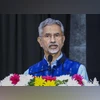 "India flags constricted energy trade, selective curbs at East Asia Summit")

