India, Germany highlight 'strategic autonomy' amid global challenges
Jaishankar mentioned that both ministers reviewed the global situation, regional issues, and multilateral developments, including the Ukraine conflict
Jaishankar mentioned that both ministers reviewed the global situation, regional issues, and multilateral developments, including the Ukraine conflict. I Photo: PTI
External Affairs Minister (EAM) S Jaishankar on Wednesday held extensive talks with German Foreign Minister Johann Wadephul in New Delhi on various topics, including climate, education, and defence and security, with both ministers highlighting 'strategic autonomy' amid global challenges.
While addressing a press conference, Jaishankar said that a multipolar world, built on strategic autonomy, is best placed to respond to global challenges. "The world today faces twin challenges of economic volatility and political uncertainty. We believe that a multipolar world with strategic autonomy can best address these issues through deeper consultations and stronger cooperation among key member states," he said.
Jaishankar mentioned that both ministers reviewed the global situation, regional issues, and multilateral developments, including the Ukraine conflict.
Germany supports EU-India FTA
Echoing similar views, Wadephul said, “Germany considers India one of our most important allies. In these uncertain times, it is reassuring to know that India and Germany are on the same team, working together to tackle common challenges and strengthen our cooperation.”
He noted that as the world’s most populous country and its largest democracy, India holds a special place in a strategically vital region. "Our economies, in particular, have much to gain by expanding our partnership," he added.
Wadephul also reaffirmed Germany’s support for the EU-India free trade agreement. "We hope the negotiations can move quickly so the agreement can be concluded before the end of this year. If others create barriers to trade, our response should be to lower those barriers and hurdles," he stressed.
The ministers held wide-ranging discussions on several areas of bilateral cooperation. The EAM assured Wadephul that any concerns German companies may face while entering or operating in India would receive special attention. He highlighted semiconductor manufacturing as a particularly promising sector, welcoming German investments and noting that India’s talent can significantly contribute to Germany’s growing capabilities.
'Space cooperation has lot of potential'
Wadephul’s visits to the Indian Institute of Science in Bengaluru and the Indian Space Research Organisation (Isro) were welcomed by Jaishankar. "I think space cooperation has a lot of potential, and we agreed that it should be more aggressively explored," he said.
On climate and energy, the two sides reviewed their Green and Sustainable Development Partnership, which already supports projects like the Nagpur Metro, green energy corridors across five states, and Kochi’s integrated water transport system. Discussions also covered green hydrogen, renewable energy financing, and biofuels.
Progress in education and mobility was also noted. Jaishankar pointed out that Indian students now form the largest foreign student community in Germany. "The skilled labour strategy released by the German government offers a very good framework for mutual benefit. We have also agreed on gratis visas for short-term school and college visits to further promote student exchanges," the EAM said.
Jaishankar further raised the issue of Ariha Shah, an Indian child placed in foster care in Germany, stressing that it was essential her cultural rights be safeguarded and that she grow up in an Indian environment. He urged that the matter be resolved without further delay.
Reflecting on his visit to Bengaluru, Wadephul said he witnessed India’s growing strength as a hub of innovation and technology, especially in artificial intelligence and aerospace. "India is determined to be among the frontrunners globally. Today, we also discussed the potential for further collaboration — whether in aerospace or in AI, where both our countries believe it is important to set norms, rules, and values," he said.

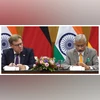 "India, Germany highlight 'strategic autonomy' amid global challenges")


 Connect with us on WhatsApp