
India races to build hydropower plants in region claimed by China: Report
Under the scheme, about Rs 9,000 core will likely be allotted for the 12 hydropower projects in Arunachal Pradesh, said the sources, who have direct knowledge of the matter
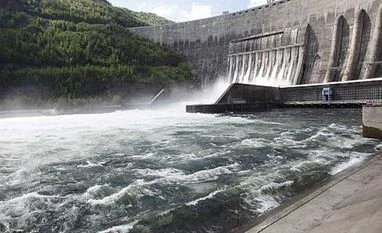 "India races to build hydropower plants in region claimed by China: Report")
Explore Business Standard

Associate Sponsors
Co-sponsor
Under the scheme, about Rs 9,000 core will likely be allotted for the 12 hydropower projects in Arunachal Pradesh, said the sources, who have direct knowledge of the matter
India plans to spend $1 billion to expedite the construction of 12 hydropower stations in the northeastern Himalayan state of Arunachal Pradesh, two government sources said, a move that could raise tensions with China that lays claims to the region.
The federal finance ministry under Nirmala Sitharaman recently approved up to Rs 7,500 crore ($89.85 million) in financial assistance to each hydropower project in the northeastern region, the sources said.
Under the scheme, about Rs 9,000 core will likely be allotted for the 12 hydropower projects in Arunachal Pradesh, said the sources, who have direct knowledge of the matter.
The scheme is likely to support northeastern states and help them finance equity holdings in the projects they host. Having state governments on board generally helps in expediting regulatory clearances, locals rehabilitation and negotiations on sharing electricity with the host state.
The plans for the hydropower stations are expected to be announced in the 2024/2025 federal budget that Prime Minister Narendra Modi's government will unveil on July 23, the sources said, declining to be named as the information remained confidential.
The Indian finance and power ministries and China's foreign ministry did not immediately respond to Reuters' requests for comment.
Last August, the government awarded contracts to state-run firms NHPC, SJVNL and NEEPCO for the construction of the 11.5-gigawatt-capacity plants entailing an estimated investment of $11 billion, as part of a broader project to develop infrastructure in the border region.
None of the companies responded to a request for comments.
These power plants were earlier enlisted with private sector firms, but remained non-starters due to various reasons.
India has built less than 15-gigawatt hydropower plants in the last 20 years, while installations of new coal and other renewable sources of energy were nearly 10 times of the new hydropower projects.
India and China share a 2,500 km (1553.43 mile) largely un-demarcated border, over which they fought a war in 1962.
India says Arunachal Pradesh is an integral part of the country, but China claims it is a part of southern Tibet, and has objected to other Indian infrastructure projects there.
The Indian government is pushing projects in the eastern region following reports that Beijing could construct dams on a section of the Brahmaputra river, known as the Yarlung Tsangbo in China, that flows from Tibet through Arunachal Pradesh.
India is concerned that Chinese projects in the region could trigger flash floods or create water scarcity.
Both countries are working to improve infrastructure along their border regions since clashes in western Himalayas left 20 Indian and at least four Chinese troops dead in 2020.
Last week, India Foreign Minister Subrahmanyam Jaishankar met his Chinese counterpart Wang Yi in Kazakhstan where the two agreed to step up talks to resolve issues along their border.
(Only the headline and picture of this report may have been reworked by the Business Standard staff; the rest of the content is auto-generated from a syndicated feed.)
First Published: Jul 09 2024 | 5:36 PM IST

