
Problems with India can be resolved through open dialogue: Nepal PM Oli
Ties between the two countries came under severe strain in 2020 after Kathmandu published a new political map that showed the three Indian territories as part of Nepal
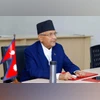 "Problems with India can be resolved through open dialogue: Nepal PM Oli")
WebinarsNew
Deep DiveNew
Explore Business Standard
Ties between the two countries came under severe strain in 2020 after Kathmandu published a new political map that showed the three Indian territories as part of Nepal
Nepal's Prime Minister K.P. Sharma Oli said on Saturday that the problems between Nepal and India could be resolved through open dialogue and warmheartedness.
"There exist few problems, not many, between Nepal and India, and they can be resolved, if we maintain warm heart and open dialogue," Oli said here at the launch of former administrator Surya Nath Upadhyay's book titled 'International Watercourses Law: A Perspective on Nepal-India Cooperation'.
"India is our friendly neighbour and Nepal and India have rich cultures so we should have an open dialogue. The blame cannot be merely imposed on the geopolitical situation for our inability to speak openly. We should not be involved in any game meant for gaining and sustaining power," Oli said.
"Earlier, foreign relations were maintained and dominated by the country's strengths. After the IInd World War, a country should present its national interests reasonably and justifiably in line with international treaties and agreements."
"There should not be a unilateral approach while working on common resources. It should be done based on consensus and bilateral discussion", Oli asserted.
Ties between the two countries came under severe strain in 2020 after Kathmandu published a new political map that showed the three Indian territories - Limpiyadhura, Kalapani and Lipulekh - as part of Nepal.
The then Prime Minister Oli attempted to use the issue to fend off increasing domestic pressure.
Oli in the past had publicly criticised India for allegedly interfering in Nepal's internal matters.
Upadhyay said the Himalayan nation has yet not received the report prepared by the Eminent Persons Group of Nepal and India.
"The EPG was formed based on consensus between the prime ministers of the two countries to resolve issues between Nepal and India," the former bureaucrat said.
"There was no issue of timing from the Nepali side to receive the report. Maybe the Indian side will arrange an appropriate time for it," he said, adding that "it will be easier to discuss the pending issues between the two countries" after the Himalayan nation received the report.
Land-locked Nepal relies heavily on India for the transportation of goods and services. Nepal is also important for India in the context of its overall strategic interests in the region, and the leaders of the two countries have often noted the age-old Roti Beti relationship.
Nepal shares a border of over 1,850 km with five Indian states Sikkim, West Bengal, Bihar, Uttar Pradesh and Uttarakhand.
(Only the headline and picture of this report may have been reworked by the Business Standard staff; the rest of the content is auto-generated from a syndicated feed.)
First Published: Sep 07 2024 | 9:14 PM IST


 Connect with us on WhatsApp