
Ties with China to become tense, need deterrence: Ex-diplomat Gokhale
Risk management on a broader political level was also required till India is able to develop the economy to a certain level, he said
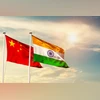 "Ties with China to become tense, need deterrence: Ex-diplomat Gokhale")
Explore Business Standard

Associate Sponsors
Co-sponsor
Risk management on a broader political level was also required till India is able to develop the economy to a certain level, he said
India's ties with China are likely to become tense in the next 10 years due to China's policy and its growing presence in the Indian Ocean, former foreign secretary of India Vijay Keshav Gokhale said on Tuesday and called for steps to build deterrence.
Risk management on a broader political level was also required till India is able to develop the economy to a certain level, he said.
"If I am to make a prognosis of the future trajectory of our relationships from their perspective, I would say they would base their policy on two presumptions," Gokhale said while delivering a special talk on "India-China relations as seen from China's perspective" presided by Tamil Nadu Governor R N Ravi at the Raj Bhavan here.
"Firstly, relations will become tense in the next ten years and more combative along the line of actual control and in the Indian Ocean too because China will have a naval presence in the Indian Ocean," the former diplomat, said. Therefore armed coexistence will be a norm where China is concerned.
Secondly, China will see a closing window of opportunity. There were significant capacity deficiencies India faced vis-a-vis China both economically and militarily, he said.
"Chinese policy will move in four main directions - grey zone war that was witnessed in the Galwan valley to heighten our insecurity, erosion in our regional stature and influence, raising doubts in the US about India's capacity to assist them when it comes to their core interest, and deterring others from band-wagoning with us when it comes to building the idea of Indo-Pacific," he claimed.
So the way forward for India was to build deterrence, building a new relationship based on the current realities and looking at peace and tranquility agreements, Gokhale said.
Until a truly multi-polar world emerges India will have a formidable adversary in the north - a neighbour with whom the country has an economic dependency and also a fundamental disagreement territorially, and diplomatically in terms of outlook with China.
"We should draft a policy which should be able to take care for the next ten years to come. And there's a good chance that we may reverse the gap substantially by 2047," he said.
China's perception that India has become an "adjunct threat" to it because India has tilted towards the US, also mattered, the former foreign secretary and author said.
"They don't think us as neutral anymore ... the way they will deal with us will be different from the way they dealt with us in the past 60-70 years," Gokhale said and called for steps to mould public opinion on a long-term relations with China.
(Only the headline and picture of this report may have been reworked by the Business Standard staff; the rest of the content is auto-generated from a syndicated feed.)
First Published: Sep 10 2024 | 10:31 PM IST

