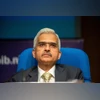
The benchmark interest rate in the country will hinge on the future trajectory of inflation, Reserve Bank of India Governor Shaktikanta Das has said, emphasising that month-on-month inflation momentum — whether it’s building up or moderating — will be key to the central bank’s decision-making process.
“It is not so much (about) how the inflation is now; we have to look at for the next six months, for the next one year -- what is the outlook on inflation,” Das said in an interview with CNBC, as he cited July’s revised inflation figure of 3.6 per cent and August’s reading of 3.7 per cent. “Therefore, I would like to step back and look at more carefully -- what is the future trajectory of inflation and growth. And based on that, we will take a decision.” He was replying to a question about when the central bank would start cutting the repo rate.
The RBI increased the repo rate by 250 basis points between May 2022 and February 2023. Since then, the six-member Monetary Policy Committee (MPC) has kept rates and stance unchanged.
Asked about the possibility of a rate cut in the upcoming policy review, scheduled for October 7-9, Das pointed out that a new MPC will be constituted, with three new external members replacing those whose tenure has ended after four years. Decisions, he said, will be made after discussions within the new committee.
On the broader economy, Das noted that India's GDP growth momentum remains strong, apart from a temporary slowdown in government expenditure — likely due to the recent election season. He expects budgeted amounts to be spent in the coming months, allowing the government to catch up on expenditure.
The RBI is confident that India will achieve 7.2 per cent growth in 2024-25, with a long-term sustainable potential growth rate of between 7.5 per cent and 8 per cent. While a growth rate above 10 per cent would require further analysis, Das said the current trajectory suggests India’s growth story will remain robust, with sufficient job creation at projected growth levels.
Das also cautioned against providing forward guidance on interest rates, citing the risks it poses in an uncertain global environment. He stressed that unforeseen geopolitical and climate-related events could disrupt expectations, making it difficult for authorities to uphold forward guidance. "It can be very risky because it applies both ways," Das said, and explained amid high uncertainty, diverging monetary policies and growth scenarios across countries further complicate the picture. “Offering forward guidance in this context could mislead markets. If circumstances change unexpectedly, authorities may find themselves unable to uphold the guidance, potentially leading markets in the wrong direction without yielding any positive outcomes. As a result, forward guidance on matters like rate hikes — such as when and by how much — are not typically provided.”
“Climate-related developments and weather-related developments are also coming with the kind of suddenness which we have not seen before. So, there is so much uncertainty and monetary policies of countries are now also diverging. Growth scenarios are also diverging,” he further said.
On the RBI’s active intervention in the foreign exchange market, its governor said that the central bank’s stated objective is to minimise excessive volatility in the rupee because such volatility does not benefit the economy.
Although some expect the rupee to depreciate further, Das argued that these expectations fail to account for India’s improved economic position and the significant foreign exchange inflows the country is attracting -- especially after its inclusion in global bond indices.
"When financial sector fundamentals are so strong, the rupee naturally gains strength. We’re not artificially keeping it strong," he said. “People probably expect the rupee to depreciate more. But you are not looking at the fact that the Indian economy has become much stronger today.”
He also said that there are no significant risks or concerns in the non-banking financial sector as financial indicators, such as capital adequacy and gross non-performing assets (GNPA), remain stable.

 "Rate cut hinges on inflation trajectory: RBI Governor Shaktikanta Das")

