
Homebuyers squeezed as property prices rise faster than income, NCR tops
Among cities, NCR leads the charge with a 42-point annual rise, driven by strong investor interest and job growth in Noida, Greater Noida, and Gurugram
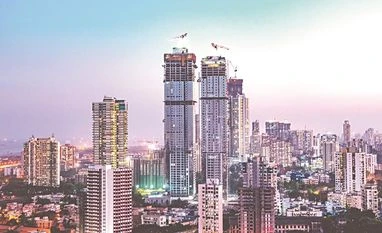 "Homebuyers squeezed as property prices rise faster than income, NCR tops")
Explore Business Standard
Among cities, NCR leads the charge with a 42-point annual rise, driven by strong investor interest and job growth in Noida, Greater Noida, and Gurugram
Home prices across India’s top 13 cities surged sharply in September 2025, with the All-India Housing Price Index (HPI) rising 14 points year-on-year and 8 points sequentially. NCR led the rally, followed by Bengaluru and Hyderabad while Mumbai’s luxury segment continued to dominate price momentum, according to latest Housing Price Index (HPI) for September 2025, jointly published by Housing.com and Indian School of Business (ISB).
Despite this rise, affordability stress is deepening—76% of buyers in metros are now stretched on EMIs and down payments, the report warned, even as sales volumes dipped 9% in Q3 2025 across the top 7 cities.
Key Price Movements You Must Know
These city-level disparities mean that your “best bet” varies heavily by location and segment.
What This Means for Homebuyers
1. EMIs and Upfront Costs Rising Sharply
As prices rise, the down payment, stamp duty, and registration costs scale up proportionately. In high-growth cities like NCR and Bengaluru, that can push monthly EMIs into ranges affordable only by higher-income segments.
2. Luxury & 3BHK Remain the Drivers
The report notes that 3BHK and above units continue to attract demand in metros. As post-COVID space needs grow and buyers prefer comfort, these larger homes are outperforming compact units.
3. Tier-2 / Peripheral Areas Show More Stability
Smaller cities and peripheral zones are seeing more restrained growth—smaller upsides but also lower downside risk. For middle-income families, these areas may offer more manageable investments.
4. Interest Rates and Home Loans Matter Even More
With the current interest rate environment remaining stable, loan costs are less of a variable. But any upward move in home loan rates in future quarters could bite hard as housing costs rise.
5. Affordability Is the Breaking Point
Even as prices rise, incomes are not matching pace in many markets. The report flags affordability as a major constraint, especially for mid-income buyers who may now be priced out of “dream homes.”
Sample Scenario: What Rising HPI Could Mean for You
Suppose you were eyeing a 3BHK in NCR priced recently at ₹1.5 crore. A 42-point HPI jump suggests that over the last year, the equivalent price index may have increased around 42%. If translation to actual price is linear (simplified assumption), the same home might now cost ₹2.1 crore in a year—adding ₹60 lakh extra burden in just 12 months.
Your 20% down payment would move from ₹30 lakh → ₹42 lakh. Your loan size and EMI also scale. Even if your income grows, such leaps demand careful planning and emergency buffers.
Shekhar Tomar, Assistant Professor of Economics and Public Policy at ISB, pointed out that in terms of pricing signs of relative stability were visible during the June quarter.
“India’s housing market showed resilience in Q2 2025, with demand particularly strong in the high-ticket 3BHK segment across NCR, Hyderabad and Bengaluru. While year-on-year prices remain higher, Q2 witnessed relative stability, suggesting a short-term moderation. With the 100-basis point repo rate cut in the first half of 2025 and inflation under control, we expect demand momentum, especially for larger homes in metropolitan regions, to continue driving the market in the coming quarters,” said Mr Tomar.
What should buyers do?
Lock in early: If you find a project you believe in, booking early may help you beat future price escalations.
Don’t overstretch: Even though the numbers look exciting, avoid overcommitting beyond your comfortable EMI range.
Focus on growth corridors: Peripheral zones in NCR, Bengaluru's outer ring, Hyderabad peripheries may offer better risk-reward.
Monitor interest rates: A small upward move in home loan rates hurts more when prices are already high.
Use rebates & schemes: Stick to projects that offer builder discounts, extended payment plans, or first-time homebuyer incentives.
“Short-term pressures from trade uncertainties notwithstanding, India’s housing sector will continue to garner both attention and attraction as it gradually attains more maturity. While cost concerns do persist requiring government intervention, some positive changes are already visible. The Goods and Services Tax reforms, for instance, are expected to improve affordability, supporting demand, especially in the mid-segment, a category that must perform well for India to fulfil its housing-for-all dream,” said Mr. Praveen Sharma, CEO, Housing.com.
First Published: Oct 01 2025 | 8:34 AM IST


