Tax refund scam alert: Don't fall for that 'manual verification' email
Government warns taxpayers about phishing attempts to gather their financial information
Amit Kumar New Delhi An email falsely claiming to be from the Income-Tax department is attempting to dupe taxpayers by asking them to “manually verify” attached documents or click links so that they can get refunds.
The Fact Check Unit of the government’s
Press Information Bureau (PIB) has flagged such emails as fraudulent and urged citizens to exercise caution.
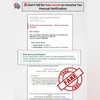
Fake email
The phishing email, designed to mimic the tax department’s communication, typically reads:
"Dear Taxpayer,
This is an official notification regarding your Income Tax Refund for Assessment Year 2024-25. Amount eligible: Rs 60,000…all refunds above Rs 25,000 require recipient confirmation to prevent unauthorised payouts and protect taxpayers."
It then prompts recipients to click on a link or fill in their financial information.
According to PIB, the email is a malicious attempt to steal personal and financial data, including bank account numbers, passwords and credit card information.
How to identify phishing attempt
The Income-Tax department has said it never asks for personal financial information like PIN numbers or passwords.
Here are red flags to watch out for:
- Email asking for personal or banking information.
- Poor grammar, unusual formatting, or suspicious domain names in the sender’s address.
- Links that redirect to websites resembling official portals but with slight changes in spelling or design.
- Attachments that you didn’t expect to receive.
What should you do if you receive such an email?
PIB advises the following steps:
1. Do not reply to the email.
2. Do not click on any links or download attachments, as these may contain malware.
3. Do not enter any personal or financial information.
4. Forward the suspicious email to webmanager@incometax.gov.in and incident@cert-in.org.in for further investigation.

 "Tax refund scam alert: Don't fall for that 'manual verification' email")


 Connect with us on WhatsApp