


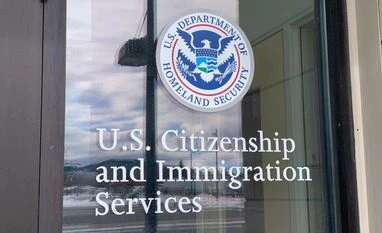
 "\"If you lie on your visa application, we'll find out\": USCIS to immigrants")


“If you lie on your citizenship application, we will find out.” This was a warning issued by the US Citizenship and Immigration Services (USCIS) on Thursday.
The statement followed the indictment of a Middlesex County man accused of concealing ties to the Islamic State group on a naturalisation form.
Gafur Abdudzhamilovich Aliev, 44, of Edison, New Jersey, has been charged with making false statements and one count of perjury, according to the US Attorney’s Office.
Federal authorities allege that between 2018 and 2020, Aliev was active in several encrypted messaging channels linked to the Islamic State of Iraq and al-Sham (ISIS). These channels were used to connect with members, supporters and potential recruits.
On August 7, 2020, Aliev reportedly told an unidentified person that he had previously sent money to ISIS for weapons. Nine days later, he told the same individual that sending between $100 and $400 to ISIS was “ok”. A month after that, he is accused of saying that financial support for jihad was as necessary as physical involvement because “weapons and equipment cost money”.
Despite these exchanges, authorities said Aliev declared on his naturalisation application filed in December 2020 that he had never been associated with a terrorist organisation.
Cases of misrepresentation not uncommon
This is not the only case involving false information on US immigration forms.
In January, US-based immigration lawyer Jim Hacking, who runs Hacking Immigration Law, LLC, shared an example of an immigrant who failed to disclose a child born outside marriage on his visa application.
“He became a citizen about a year ago, but he had a child out of wedlock two and a half years ago,” Hacking said in a video. “This is a big, big problem, because now he thinks he wants to go ahead and apply to bring that child to the United States.”
Hacking explained that the man received a 10-year green card after marrying a US citizen and later applied for citizenship under the three-year rule, which is available to those in a bona fide marriage with a US citizen. However, he had not listed the child on the N-400 form.
“You lied to USCIS. You lied on your naturalisation form,” said Hacking.
False claims can bar entry or lead to deportation
Under US immigration law, misrepresentation on applications can result in a person being found inadmissible. This can prevent entry into the country or lead to removal if already present.
Authorities have said some applicants believe omitting certain facts will help their case or are unaware of the consequences of doing so. But lying, whether about family members, criminal records or organisational ties, can lead to long-term immigration consequences.
USCIS has asked the public to report suspected immigration fraud, including false claims related to marriage, work visas or asylum.
“Protecting the integrity of the immigration process is a priority for USCIS,” the agency said in a statement issued on March 20, 2025. “One way we protect the immigration system is by making it easy for you to report immigration fraud and abuse through our online tip form. This includes fraud related to H-1B visas, H-2B visas, EB-5, asylum, marriage and other immigration benefits.”
The online form allows tips to be submitted anonymously. “You do not have to tell us your name or provide contact information,” the form reads. “However, if we need additional information and have no way to contact you, it may limit our ability to review your tip and take further action.”
USCIS encourages people to provide details such as names, addresses, and any evidence that may assist investigations.
New vetting measures and data collection
In a broader tightening of immigration procedures, the US Department of Homeland Security (DHS) said it would collect data from more than 3.5 million immigrants each year, including Indian nationals applying for green cards, citizenship or other benefits.
This follows Executive Order 14161, signed by President Trump in January 2025. The order revives several policies from his earlier term and introduces stricter vetting protocols.
One new requirement is for applicants to submit social media handles on key immigration forms. Passwords will not be required, but the measure is meant to verify identities and assess security risks.
The forms affected include:
< N-400 (application for naturalisation)
< I-131 (application for travel document)
< I-192 (application for advance permission to enter as nonimmigrant)
< I-485 (application for adjustment of status)
< I-589 (application for asylum)
< I-590 (registration for classification as refugee)
< I-730 (refugee/asylee relative petition)
< I-751 (petition to remove conditions on residence)
< I-829 (petition by investor to remove conditions on permanent resident status)