US green card for siblings Explained: Bringing a brother or sister to live in the United States as a permanent resident is possible, but it’s a long process under American immigration law. Only US citizens aged 21 or older can sponsor their siblings for immigration, lawful permanent residents (green card holders) cannot.
“When a US citizen sponsors a sibling, the process begins with Form I-130 (Petition for Alien Relative), but this visa category takes time. Unlike immediate relatives such as spouses, parents, or children under 21, siblings fall under the family preference system, which has annual limits,” said Abhisha Parikh, a US-based immigration lawyer, in a social media post.
What does sibling visa availability depend on?
“Visa availability depends on your sibling’s country of origin and current priority date listed in the US Department of State’s Visa Bulletin. For countries with high demand like Mexico, India, China, or the Philippines, the wait can span many years, sometimes even decades,” Parikh explained. She advised checking the monthly Visa Bulletin to track which petitions are being processed and to stay updated on one’s case.
Who is eligible to sponsor a US sibling visa?
US citizenship and age
The sponsor must be a US citizen aged 21 or older. Citizenship can be by birth or through naturalisation. Evidence includes a US passport, birth certificate, Consular Report of Birth Abroad, naturalisation certificate, or certificate of citizenship.
Qualifying sibling relationship
The sibling must share at least one parent. This includes biological, half, step, and adopted siblings, provided the legal or familial tie was established before age 18 (or age 16 in adoption cases).
Documents needed include:
• Birth certificates of both siblings showing a common parent
• Legal documents proving adoption or step-relationships
• Proof of name change, if applicable
Sponsor’s financial ability
While not needed at the initial filing stage, sponsors must later submit Form I-864 (Affidavit of Support) to prove financial capacity to support the immigrant sibling and their family. Income must meet the minimum federal poverty guideline for household size.
Who can and cannot be sponsored US sibling Visa?
A US citizen can sponsor a sibling of any age or marital status, and their spouse and unmarried children under 21 automatically qualify as derivative beneficiaries under the same petition.
However, green card holders cannot sponsor siblings. Only US citizens can. Other relatives like cousins, nephews, or grandparents also cannot be directly sponsored.
Siblings of US citizens fall under the Family Fourth Preference (F4) category, the lowest among family-based visas. Around 65,000 F4 visas are issued each year, and because demand far exceeds this number, wait times can stretch beyond 15 to 20 years.
How do family preference visas differ from immediate relatives?
Immediate relatives include only a US citizen’s spouse, unmarried children under 21, and parents of adult citizens. These categories have no numerical caps or waiting lists.
Siblings, however, are in the capped F4 category. Each country can receive no more than 7 per cent of the total annual quota, which causes long delays for countries with heavy demand such as India and the Philippines.
What is the priority date and why does it matter for sibling visa?
The priority date is the date USCIS receives your I-130 petition. It determines your sibling’s place in the queue. Immigrant visas are issued in the order of these dates.
The US Department of State’s Visa Bulletin lists the priority dates currently being processed. As of 2025, sibling visas can take over 10 years, and in many cases, more than two decades. For instance, in the September 2025 Visa Bulletin, cases filed in March 2001 for Mexico were being processed (a 24-year wait).
How to file Form I-130 (Petition for Alien Relative)
Form and filing fee
Form I-130 can be filed online or by mail. The 2025 filing fee is $625 (Rs 55,500) online or $675 by mail. Each sibling requires a separate petition, though their spouse and unmarried children under 21 are automatically included.
Required documentation
Include proof of US citizenship (passport or birth certificate), both siblings’ birth certificates, proof of relationship (adoption or marriage records if applicable), and name change documents if needed. Translations must be certified if documents are not in English.
Receipt notice and processing
USCIS issues a receipt notice (Form I-797C) within weeks of submission. This date becomes the priority date. Processing can take several months to a year or more, depending on workload. Approval confirms the petition’s validity; it does not mean a visa is available yet.
What happens after USCIS approval?
Once USCIS approves the petition, it moves to the National Visa Center (NVC), which contacts the sponsor when the priority date nears the cut-off in the Visa Bulletin. The sponsor and sibling must then:
• Submit Form I-864 (Affidavit of Support) with income proof
• File the immigrant visa application (Form DS-260) online
• Upload civil documents such as birth and marriage certificates
• Pay visa and affidavit fees
When the case becomes current, the sibling will be scheduled for an interview at the relevant US consulate or embassy.
What’s the difference between consular processing and adjustment of status?
Consular processing: The sibling attends a visa interview abroad. Upon visa issuance and entry to the US, they become a permanent resident.
Adjustment of status: Available only if the sibling is already lawfully in the US and can maintain valid status for the long wait, rare due to the F4 backlog.
What challenges should applicants prepare for?
No interim benefits
An I-130 petition doesn’t grant temporary stay or work rights. The sibling must wait outside the US until the green card is available. A pending petition can also make obtaining temporary visas harder due to perceived immigrant intent.
No expedited processing
Sibling petitions cannot be fast-tracked. Only accurate filing and timely responses can prevent unnecessary delays.
Alternative options
While waiting, the sibling might explore employment-based visas, student visas, or the Diversity Visa Lottery, though a pending I-130 can make securing non-immigrant visas challenging.
Bringing a sibling to the US is therefore a commitment measured in years, not months, and demands patience, organisation, and accurate paperwork from start to finish.

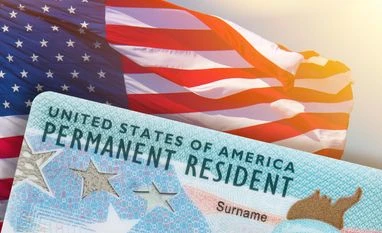 "US green card for siblings: Who can sponsor, timelines and rules explained")


 Connect with us on WhatsApp