
After floods, plastic garbage becoming a threat in Himachal: Scientists
Environmentalists, farmers and locals are worried as the tourists visiting the hills end up discarding plastic garbage in the hills of the Himalayan region
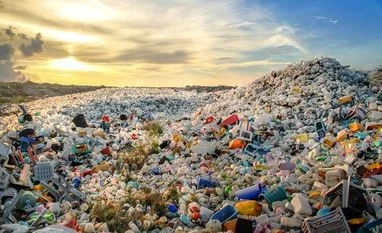 "After floods, plastic garbage becoming a threat in Himachal: Scientists")
WebinarsNew
Deep DiveNew
Explore Business Standard
Environmentalists, farmers and locals are worried as the tourists visiting the hills end up discarding plastic garbage in the hills of the Himalayan region
Environmental scientists have expressed their concern over plastic waste damaging the Himalayan ecosystem and biodiversity in the north Indian hill regions like Himachal Pradesh, which were impacted by floods recently.
Environmentalists, farmers and locals are worried as the tourists visiting the hills end up discarding plastic garbage in the hills of the Himalayan region.
This concern of environmentalists for the ecology in the Himalayan region is significant as member nations of G20 including the European Union and India would be taking up the issue of the environment in the region during the G-20 meeting.
"The total temperature has increased slightly and it has caused heavy rainfall impacting the region. Shimla is not in a condition to deal with the two to three hours of rain. We have been fighting against plastic since 1995. This year, the Chief Minister had directed to move forward for a complete ban on plastic. The review has also been done at the Chief Secretary level. The feedback is very astonishing, we are working with NGOs at village, and district level as the Himalayan region is very sensitive," Suresh C Attri, an environmentalist told ANI.
He further said that over 45,0000 kilograms of plastic have been collected from the sensitive areas of the Himalayan region so far this year.
"The Greater National Himalayan Park, Kheer Ganga and Manimahesh we have observed that tourists travelling to these locations are throwing garbage. We are taking help from NGOs, and school and college children. This year the Healing Himalayas organization collected over 450000 kilograms of plastic from these sensitive areas of the Himalayas and disposed off it scientifically," Attri added.
Further, he demanded a complete ban on plastic. "During the rain this year the plastic waste has entered the drains and created a choking position. We have seen such examples in Shimla too. This has come up as a major cause of flooded situations in the region. I completely agree that plastic should be completely banned. The plastic waste after mixing up with biodegradable material is causing greenhouse gas emission," Attri added.
Echoing Attari, the former Deputy Mayor of Shimla city also said that plastic should be banned completely instead of recycling.
"Plastic waste is a major concern. The blocking of drains in major places also caused floods. The small drains have been badly hit and it will not be right to say that it has happened only due to plastic. We shall have to go for a complete ban on plastic in the Himalayan region here. Now instead of recycling, we should go for a refuse plastic campaign," said Tikender Singh Panwar, an environmentalist and former Deputy Mayor of Shimla city.
The capital town produces nearly 2800 tons of solid waste including plastic and Manali produce over 1100 tons per month. Meanwhile, with the inflow of tourists, 9000 tons of garbage is collected during those two months (tourist season) and there is a certain amount of garbage that remains uncounted and is thrown into hills, resulting in destroying the ecology of the Himalayan region here.
The entire state in all twelve districts on average produces garbage of over 15000 tons per month and there is no proper disposal in all parts of the state excluding Shimla and a few more towns in the state.
Himachal Pradesh was the first state in the Southeast Asian region to ban coloured polythene recycled bags and also to enact law in 1995 and became the first state in India to ban plastic and polythene carry bags in 2009 while in 2011, plastic cutlery was banned.
Later in 2013, with the recommendation of a committee and directions, the High Court also banned single-use chips packets, rappers and other packaging materials and also of plastic plates with packed materials, cups and glasses but this was challenged in the apex court of the country.
People had followed this and most of such plastic in use excluding packed materials in plastic was phased out. The thermocol cutlery was later banned by the state in 2018. Despite all these efforts, plastic waste is polluting the hills.
(Only the headline and picture of this report may have been reworked by the Business Standard staff; the rest of the content is auto-generated from a syndicated feed.)
First Published: Sep 07 2023 | 7:22 PM IST


 Connect with us on WhatsApp