Home / India News / India backs Dalai Lama's sole authority in choosing his next successor
India backs Dalai Lama's sole authority in choosing his next successor
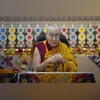
Dalai Lama said the 600-year-old institution will continue and only his office can decide his successor; China insisted the process must follow its Chinese regulations
India on Thursday strongly rejected China's assertion that it must approve the reincarnation of the Dalai Lama, emphasising that only the Tibetan spiritual leader has the sole authority to determine his successor.
Union Minister for Minority Affairs Kiren Rijiju, who is currently in Dharamshala to attend celebrations marking the Dalai Lama’s 90th birthday, reiterated India’s support for the Tibetan leader’s autonomy in this matter. "And all those who follow the Dalai Lama feel that the Incarnation is to be decided by the established convention and as per the wish of the Dalai Lama himself. Nobody else has the right to decide it except him and the conventions in place," Rijiju said, as quoted by news agency PTI.
Talking to reporters, Rijiju said the Dalai Lama is the "most important and defining institution" for the Buddhists.
Dalai Lama reaffirms continuation of the institution
The spiritual leader recently affirmed that the 600-year-old institution of the Dalai Lama would continue beyond his lifetime. In a statement released on July 1, he confirmed that the authority to decide his successor lies exclusively with the Gaden Phodrang Trust, the official office of the Dalai Lama.
“I am affirming that the institution of the Dalai Lama will continue,” the Buddhist leader said. “I have received messages from Tibetans in Tibet and abroad, as well as from followers of Tibetan Buddhism across the Himalayan region, Mongolia, the Russian Federation, and even mainland China.”
“The Gaden Phodrang Trust has sole authority to recognise the future reincarnation; no one else has any such authority to interfere in this matter,” he said.
China presses its claim
China, however, has restated its longstanding position that it holds the final say in the Dalai Lama's succession. At a press briefing on Wednesday, Chinese Foreign Ministry spokesperson Mao Ning said that the reincarnation of the 14th Dalai Lama must “comply with Chinese laws and regulations, as well as religious rituals and historical conventions”, according to a Reuters report.
Beijing has consistently sought to exert control over the selection of Tibetan religious figures, challenging centuries-old spiritual practices that guide such decisions.
Dalai Lama’s past response to china’s stance
The 14th Dalai Lama, born Lhamo Dhondup in 1935, was recognised at the age of two through a traditional process involving visions, omens, and ritual tests — a method deeply rooted in Tibetan Buddhist customs.
The spiritual leader has previously mocked Beijing’s claim over the reincarnation process. In a 2017 remark, he said, “In order (for the) Chinese government to take responsibility for reincarnation in general, particularly me, first, Chinese communists should accept the theory of rebirth.”

 "India backs Dalai Lama's sole authority in choosing his next successor")


