Home / India News / Delhi Jal Board spent Rs 1,011 cr under Yamuna Action Plan in 8 yrs
Delhi Jal Board spent Rs 1,011 cr under Yamuna Action Plan in 8 yrs
In response to an RTI query, the DJB said it received another Rs 205 crore in funds from the NMCG in the last five years and spent all of it in expenditure under the Namami Gange Project
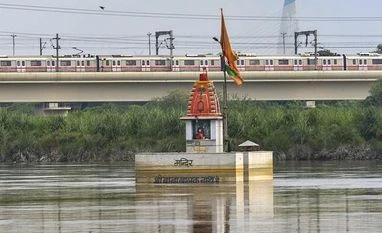
A metro train passes near a submerged temple, in New Delhi (Photo: PTI)
3 min read Last Updated : Jul 16 2023 | 6:14 PM IST
The Delhi Jal Board has said it received Rs 1,071.37 crore from the National Mission for Clean Ganga (NMCG) in the last eight years and spent Rs 1,011.67 crore under the Yamuna Action Plan - III during the period.
In response to an RTI query, the DJB said it received another Rs 205 crore in funds from the NMCG in the last five years and spent all of it in expenditure under the Namami Gange Project.
With the NMCG funds, nine major projects were taken up since 2015-16 and the most expensive among them was the construction of 564 MLD Sewerage Treatment Plant (STP) at Okhla under the Yamuna Action Plan III at a cost of Rs 431.40 crore, the DJB said.
The DJB, responsible for the production and distribution of drinking water as also for collection, treatment and disposal of domestic sewage in the national capital, shared the figures in response to a query by Noida-based RTI activist Amit Gupta.
Sharing the year-wise details of funds received in the last eight years, the DJB said it got Rs 4.96 crore in 2015-16, Rs 2.17 crore in 2016-17, Rs 36.37 crore in 2017-18, Rs 190 crore in 2018-19, Rs 160 crore in 2019-20, Rs 225 crore in 2020-21, Rs 390 crore in 2021-22 and Rs 70 crore in 2022-23.
In terms of expenditure, the DJB said it spent Rs 1.11 crore in 2015-16, Rs 3.68 crore in 2016-17, Rs 15.93 crore in 2017-18, Rs 113.74 crore in 2018-19, Rs 219.49 crore in 2019-20, Rs 299.91 crore in 2020-21, Rs 233.21 crore in 2021-22 and Rs 124.60 crore in 2022-23, according to the written reply.
The DJB, which functions under the Delhi government, also received funds from the NMCG under the Namami Gange project.
In 2018-19, the DJB said it received Rs 120 crore, followed by Rs 55 crore in 2019-20, Rs 10 crore in 2020-21, Rs 15 crore in 2021-22, Rs 5.45 crore in 2022-23.
In terms of expenditure from these funds, it said it spent Rs 55.05 in 2018-19 followed by Rs 72.65 crore in 2019-20, Rs 38.24 crore in 2020-21, Rs 36.44 crore in 2021-22, Rs 3.45 crore in 2022-23, according to the RTI reply.
On achievements under the Namami Gange programme, the DJB cited the construction of 318 MLA waste water treatment plant at Coronation Pillar.
This plant is constructed to treat waste water generated from Coronation Pillar Drainage zone. The plant has been completed and commissioned, the DJB said in the written response.
The DJB also said that of the funds received from the NMCG, it spent Rs 67 lakh in public relations and public outreach.
Gupta said, "It's clear that there is no shortage of funds specially from central government still Yamuna is not in a good condition. It seems there is no sincere will at Delhi government's level to clean the Yamuna."
Delhi is currently grappling with unprecedented levels of floods with the water from the Yamuna overflowing into the city, impacting life in the national capital.
(Only the headline and picture of this report may have been reworked by the Business Standard staff; the rest of the content is auto-generated from a syndicated feed.)


 "Delhi Jal Board spent Rs 1,011 cr under Yamuna Action Plan in 8 yrs")

