Home / India News / Lutyens statue to be replaced by Rajagopalachari's at Rashtrapati Bhavan
Lutyens statue to be replaced by Rajagopalachari's at Rashtrapati Bhavan
PM Narendra Modi said Lutyens' statue at Rashtrapati Bhavan will be replaced with C Rajagopalachari's as part of a push to 'shed colonial symbols'
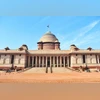
Edward Lutyens designed several landmark structures, including Rashtrapati Bhavan, North Block, South Block, India Gate, Hyderabad House, Baroda House, Patiala House and Connaught Place. (Photo: Wikipedia)
3 min read Last Updated : Feb 23 2026 | 10:06 AM IST
Prime Minister Narendra Modi on Sunday, February 22, announced that the statue of British architect Edwin Lutyens in Rashtrapati Bhavan will be replaced by a statue of C Rajagopalachari, the first governor-general of independent India.
"Unfortunately, even after independence, statues of British administrators were allowed to remain in Rashtrapati Bhavan, but those of the nation's greatest sons were denied space. A statue of British architect Edwin Lutyens also stood in Rashtrapati Bhavan. Now, this statue will be replaced by a statue of Rajaji," PM Modi said in his monthly address of 'Mann Ki Baat'.
Who was Edward Lutyens?
Lutyens was a prominent British architect known for designing imperial-era buildings in New Delhi. In 1912, he was chosen to plan and design the new capital of British India at Delhi. Along with Herbert Baker, he designed several landmark structures, including Rashtrapati Bhavan, North Block, South Block, India Gate, Hyderabad House, Baroda House, Patiala House and Connaught Place. In recognition of his work, a central area of the capital is known as Lutyens’ Delhi.
Rajagopalachari was a lawyer and a freedom fighter who became the only Indian to serve as Governor-General of India, a post abolished in 1950. A close associate of Mahatma Gandhi, he edited the 'Young India' journal during Gandhi’s imprisonment and took part in the non-cooperation and civil disobedience movements.
In June 1948, he succeeded Louis Mountbatten as Governor-General of India. After the office was abolished in 1950, he joined the government of former PM Jawaharlal Nehru and later served as Home Minister of India. Rajagopalachari resigned from the Congress Party in 1957 and went on to found the Swatantra Party, placing himself in opposition to Congress policies.
'Rajaji Utsav' to be celebrated on Feb 23: PM
PM Modi said that during the ‘Azadi Ka Amrit Mahotsav’, he spoke about the ‘Panch-Pran’ from the Red Fort, which includes freedom from the mentality of slavery. In this regard, he said that the 'Rajaji Utsav' will be celebrated on February 23, during which the statue of C Rajagopalachari will be unveiled in the central courtyard of Rashtrapati Bhavan.
"He was among those who saw power not as a position but as a service. His conduct, self-restraint, and independent thinking in public life inspire us even today," PM Modi said.
Apart from that, an exhibition on Rajagopalachari will also be held during the Rajaji Utsav from February 24 to March 1, he said.

 "Lutyens statue to be replaced by Rajagopalachari's at Rashtrapati Bhavan")


