
Govt issues alert about online frauds targeting Char Dham pilgrims
These frauds are being perpetrated through fake websites, deceptive social media pages, Facebook posts, and paid advertisements
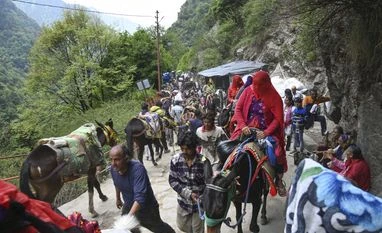 "Govt issues alert about online frauds targeting Char Dham pilgrims")
WebinarsNew
Deep DiveNew
Explore Business Standard
These frauds are being perpetrated through fake websites, deceptive social media pages, Facebook posts, and paid advertisements
The Indian Cyber Crime Coordination Centre, under the Union Ministry of Home Affairs, has alerted the public about online booking frauds, especially those targeting Char Dham pilgrims and tourists, across the country.
These frauds are being perpetrated through fake websites, deceptive social media pages, Facebook posts, and paid advertisements on search engines such as Google, the home ministry said in a statement.
The scams involve the creation of professional-looking but fake websites and social media profiles and WhatsApp accounts offering various services.
These include helicopter bookings for Kedarnath, guest house and hotel bookings for Char Dham pilgrims, online cab or taxi reservation, holiday packages and religious tours, according to the statement.
Unsuspecting individuals, upon making payments through these portals, often realise they have been duped when no confirmation or service is received and the contact numbers become unreachable.
People are advised to exercise extreme caution, the ministry said in the statement.
"Always verify the authenticity of websites before making any payments. Verify before clicking on 'sponsored' or unknown links on Google, Facebook or WhatsApp. Cross-check bookings only through official government portals or trusted travel agencies," it added.
The ministry also urged the public to report such websites immediately on the National Cybercrime Reporting Portal at cybercrime.gov.in or call 1930 in case of any fraud.
Helicopter bookings for Kedarnath can be done via heliyatra.irctc.co.in, Somnath Trust's official website is somnath.org that can be also used for guest house bookings.
To check such scams, the Indian Cybercrime Coordination Centre (I4C) is adopting a multi-prolonged strategy.
Among the steps taken include scam signal exchange through which scam signals are being regularly exchanged with IT intermediaries such as Google, WhatsApp, Facebook for proactive detection.
Cybercrime hotspots are being identified and states and Union territories from where these originate are being sensitised.
Fake websites and advertisements and impersonating social media accounts access are being disabled to protect citizens.
Suspect checking and reporting features on the National Cybercrime Reporting Portal are being developed to facilitate hassle-free reporting, according to the statement.
(Only the headline and picture of this report may have been reworked by the Business Standard staff; the rest of the content is auto-generated from a syndicated feed.)
First Published: Apr 19 2025 | 12:44 PM IST


 Connect with us on WhatsApp