India's billionth baby turns 23 today: Here's how life has been for her
Soon after her birth, her mother was taken to New Delhi's Safdarjung Hospital where ministers, bureaucrats made a beeline to get photographed with the nation's billionth citizen
BS Trends New Delhi On May 11, 2000, Aastha Arora’s birth catapulted her into the record books. India's population had officially touched one billion people with the birth of the baby girl. Soon after her birth, her mother was taken to New Delhi’s Safdarjung Hospital where ministers, bureaucrats made a beeline to get photographed with the nation’s billionth citizen.
Where is she now?
Arora has started working as a nurse at a private hospital. "I wanted to study science and become a doctor, but my parents couldn't afford to send me to a private school so I had to compromise and train as a nurse", the 23-year-old told BBC in 2022.
Arora recalled the first time she was conscious of being “the billionth baby” in an interview with Vice. “When I was in the first grade, barely five years old, I knew that I must be someone special, as the media would come every year to interview me. Later, I would realise that I was born into a simple, middle-class household. I was surviving, and not a celebrity.”
The media attention on Arora did yield some benefit to her.
Her father was struggling to pay the school fee for the two children.
"Every year when journalists visited to do a story on me, it also meant free publicity for the school, so they waived off my fee after the second standard," she said.
Astha did academically well in school - she was appointed as the school prefect. But despite her brilliant academic record, she had to switch to a government school as her family could not afford the fees of a private school.
"I was very unhappy in the new school and it showed in my grades," Arora said in the report. It was the end of her dream to become a doctor, she added.
Arora’s family claims that the government had promised her "free education, free healthcare and free railway passage." However, none of the promises were fulfilled since nothing was put into writing.
The only financial aid she received was from the United Nations Population Fund (UNFPA) which set up a fund of Rs 200,000, which could be used once Arora turned 18. The money which had grown to Rs 700,000 was used by the family to pay for Arora’s nursing course.
“I don’t expect anything else from the government, or even the world, except that they fulfil the promises they made,” she said.

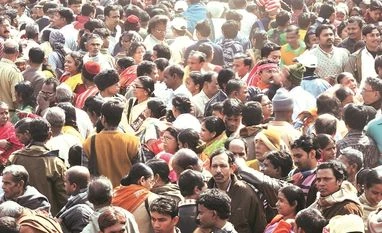 "India's billionth baby turns 23 today: Here's how life has been for her")


