
Indian Navy chief inaugurates CO2-based AC plant at INS Shivaji in Pune
"This is a major step towards meeting the government's commitment to reduce global warming and emission of gases harmful to the environment," he added
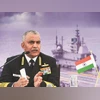 "Indian Navy chief inaugurates CO2-based AC plant at INS Shivaji in Pune")
Explore Business Standard
"This is a major step towards meeting the government's commitment to reduce global warming and emission of gases harmful to the environment," he added
Indian Navy Chief Admiral R Hari Kumar inaugurated a transcritical CO2 air conditioning plant at INS Shivaji in Pune's Lonavala in Maharashtra on Wednesday.
Speaking on the plant's inauguration, the Navy chief said, "Happy to be here today at the inauguration of this transcritical CO2 airconditioning plant. This compressor has been developed indigenously."
"This is a major step towards meeting the government's commitment to reduce global warming and emission of gases harmful to the environment," he added.
On the third aircraft carrier, Admiral Kumar said, "It is being processed through MoD. It has completed the Defence Procurement Board (DPB) clearance, but now it has to fill up the Defence Security Corps (DSC) so there are some staff work requirements. So it's under process."
Further, the Navy chief asserted that the aircraft carrier, INS Vikrant will go for a full operation clearance by the end of this year.
""Vikrant after commissioning went through the initial operation clearance we have done with the landings and placing the craft so these things are being done then she had gone through the guarantee docking. Now she will go for a full operation clearance that will progress from this month and it will be clear by the end of this year," Admiral Kumar said.
Highlighting the Navy's Atmanirbharta plan, the Navy chief said, "As our national leadership had set the target of becoming a developed country by 2024 we as an Indian Navy will be completely 'atmanirbhar' by then. We have given this commitment to our national leadership and we are working towards it."
Addressing the piracy challenges, the Navy chief emphasised the anti-piracy operations of the the force while outlining the central government's Anti-Piracy Act.
"We have two operations ongoing in the Indian Ocean region. One is an anti-piracy operation that has been going on since 2008, we have constant deployment of one ship there. Since 2008 we have deployed about 108 ships to counter piracy," he said.
"Early last year we thought piracy had gone. But recently we have noticed some activities. So we have increased our deployment and we are going aggressively after them, we want to tell them this is not the place where you can do the piracy where Indian Navy is around. One of the major facilitators has been the Government of India's Anti-Piracy Act which was approved by the Parliament and helped us to pursue our task," he added.
On pursuing the Red Sea, the Navy Chief said that the force is presently monitoring the situation there.
"Currently, we are not inside the Red Sea, we will pursue the Red Sea once our interest is threatened we have deployed a ship at the side of the Red Sea. We do not have many Indian flag vessels there and so far Indian flag vessels have not faced any issues from anyone. So far no Indian flag vessels have been targeted till today but we are monitoring the situation," he said.
The Indian Navy Chief also flagged off the Indian Navy Chadar Trek (Frozen Zanskar River, Ladakh) expedition at INS Shivaji on Wednesday.
The Navy Chief handed over the ceremonial Ice Axe to the team leader Cdr Navneet Malik and wished them a successful expedition.
According to the Navy officials, a team comprising 14 members would scale the summit at a height of 11,000 ft and unfurl the National flag and Naval Ensign.
The expedition embodies the adventurous spirit of the Indian Navy and aims to cultivate a robust and resilient workforce capable of facing challenges and adverse weather conditions, the officials said.
(Only the headline and picture of this report may have been reworked by the Business Standard staff; the rest of the content is auto-generated from a syndicated feed.)
First Published: Jan 17 2024 | 10:59 AM IST


