
Maha plans to generate 7,000 MW solar power for farmers by 2026: MSEDCL
Addressing a press conference here, MSEDCL's independent director Vishwas Pathak said farmers now get electricity for irrigation at night and find it troublesome
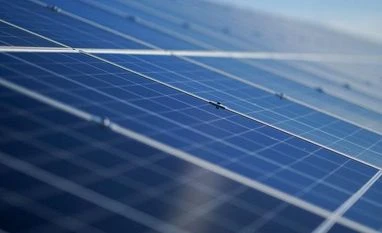 "Maha plans to generate 7,000 MW solar power for farmers by 2026: MSEDCL")
Explore Business Standard
Addressing a press conference here, MSEDCL's independent director Vishwas Pathak said farmers now get electricity for irrigation at night and find it troublesome
The state government plans to generate 7,000 megawatts of solar power by 2026 to provide daytime electricity supply to farmers which could also reduce the burden of cross-subsidy on industries, said the Maharashtra State Electricity Distribution Company Limited (MSEDCL) on Friday.
Addressing a press conference here, MSEDCL's independent director Vishwas Pathak said farmers now get electricity for irrigation at night and find it troublesome. Under the Mukhyamantri Saur Krishi Vahini Yojana 2.0 (MSKVY 2.0), the government will ensure daytime supply by installing solar panels near agricultural feeders, he said.
This will provide reliable electricity supply to farmers during the day. Their demand of many years will be fulfilled, he said.
Pathak said that Chief Minister Eknath Shinde and Deputy CM Devendra Fadnavis have decided to implement MSKVY 2.0 in the state with the aim of running at least 30 per cent of agricultural feeders in each district on solar energy by December 2025.
Under MSKVY 2.0, Pathak said, Rs 30,000 crore will be invested. The project, which MSEDCL aims to complete by 2026, will create thousands of jobs, he claimed.
Apart from using government land to install solar panels, MSEDCL will also acquire private land on lease, giving farmers an opportunity to earn an annual rent of Rs 1.25 lakh per hectare, he said.
Under MSKVY 2.0, MSEDCL has signed agreements to generate 1,513 MW of which works capable of generating 553 MW of solar power have already been commissioned, he said. Nearly 1 lakh farmers are receiving daytime power through 230 agricultural feeders.
MSEDCL buys power at an average Rs 8.5 per unit but farmers are provided at Rs 1.5 a unit, while the differential cost is recovered through cross-subsidy levied on power tariff for industries, he said.
As the electricity obtained through solar energy will be available at a rate of around Rs 3.30 per unit, the burden of cross-subsidy on the industries will be reduced in the future, he said.
According to Pathak, the Mukhyamantri Saur Krishi Vahini Yojana was launched in 2017, when Fadnavis was the CM, to meet farmers' long-pending demand for 8 hours of power supply during the day. He said it is now being implemented as Mukhyamantri Saur Krishi Vahini Yojana - 2.0.
(Only the headline and picture of this report may have been reworked by the Business Standard staff; the rest of the content is auto-generated from a syndicated feed.)
First Published: Apr 28 2023 | 6:10 PM IST


