Home / India News / Manipur stares at food shortage as ethnic violence affects farming
Manipur stares at food shortage as ethnic violence affects farming
Department of Agriculture Director N Gojendro told PTI that farmers were unable to cultivate at least 5,127 hectares of agricultural land, leading to a loss of 15,437.23 metric tonnes till June 28
There are around 2-3 lakh farmers in the state cultivating paddy on 1.95 lakh hectares of agricultural land
3 min read Last Updated : Jul 05 2023 | 12:30 PM IST
Agriculture has been affected in Manipur as many farmers are unable to tend to their fields due to the ongoing ethnic violence, and if the situation does not improve, food production in the northeastern state will be affected, a senior official said on Wednesday.
Department of Agriculture Director N Gojendro told PTI that farmers were unable to cultivate at least 5,127 hectares of agricultural land, leading to a loss of 15,437.23 metric tonnes till June 28.
"If the farmers are unable to cultivate paddy this monsoon season, the loss will increase by the end of July. The department has, however, readied fertilisers and seeds that can be harvested in a shorter period of time and required lesser amount of water," he said.
There are around 2-3 lakh farmers in the state cultivating paddy on 1.95 lakh hectares of agricultural land.
Thoubal district has the highest yield per hectare in the state, he said.
Farmers fear that there might be a shortage of locally grown 'Meitei Rice', leading to price rise next year, if farming is not carried out in full swing in all areas by the end of this month.
While some farmers in the outlying areas of Imphal are tending to their fields despite fear of being shot at by militants from the nearby hills, many are abstaining from farming in the peak season for fear of their lives.
Thokchom Milan, a farmer from Moidangpokpi area in Bishnupur district, which has seen many such happenings, said, "Incidents of firing on farmers from bunkers of militants on hilltops has paralysed paddy cultivation in the periphery of Imphal Valley."
"Some of us go to the fields with fear in our hearts but we have to cultivate else we will go hungry an entire year," he said.
The 40-year-old farmer said lesser food production this year will mean shortages and higher prices of 'Meitei Rice' next year.
Sabit Kumar, another farmer in Moirang Khunou in the same district, said, "Sowing and cultivation of the indigenous variety of rice is done in June and July, while harvesting are done five months later in November-end."
"Adding to our woes is the rainfall deficiency this year. Last year, heavy rain had flooded paddy fields in May-end, whereas this year, there has been less rain. The scorching sun dries the ground, making cultivation difficult," he said.
'Meitei Rice' needs a lot of water for cultivation. It has high starch and carbohydrates.
Chief Minister N Biren Singh had earlier said that 2,000 state forces have been deployed in sensitive areas to patrol and provide security to farmers during cultivation.
(Only the headline and picture of this report may have been reworked by the Business Standard staff; the rest of the content is auto-generated from a syndicated feed.)

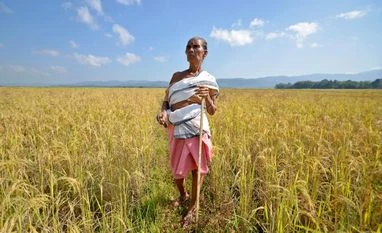 "Manipur stares at food shortage as ethnic violence affects farming")

