
Nanoparticle emissions from vehicles in Delhi pose health risks: Study
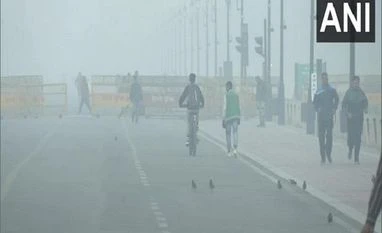
The monitoring location is surrounded by educational institutions, households, and commercial areas where the dominant source of pollution is vehicular, the researchers said
 "Nanoparticle emissions from vehicles in Delhi pose health risks: Study")
WebinarsNew
Deep DiveNew
Explore Business Standard
The monitoring location is surrounded by educational institutions, households, and commercial areas where the dominant source of pollution is vehicular, the researchers said
Delhi has been experiencing hazardous levels of nanoparticles in urban air, especially in the roadside environment, directly related to vehicular engine exhaust, raising pubic health concerns, according to a study.
Nanoparticles are minuscule particles, often measuring between 10 to 1000 nanometers (nm) in diameter, making them invisible to the naked eye.
These particles are more dangerous to human health due to their much smaller size compared to PM 2.5 or PM 10. Being 600 times smaller than a human hair, they can penetrate deep into our lungs, bloodstream, and even the brain.
The study, published in the journal Urban Climate, was conducted on Bawana Road in northwest Delhi, connecting Delhi to Rohtak in Haryana.
The monitoring location is surrounded by educational institutions, households, and commercial areas where the dominant source of pollution is vehicular, the researchers said.
Other sources include biomass burning, fuel used for residential heating in winter, and firework events, among others, they said.
Bawana Road is a busy place, with around 1,300 vehicles passing by each hour and an average of 40,000 vehicles every day.
The team, including researchers from the Delhi Technological University and Physical Research Laboratory, Ahmedabad divided the study into two periods: Period I from April 1, 2021, to June 30, 2021, and Period II from October 3, 2021, to November 30, 2021.
The study looked at different sizes of nanopollutants, ranging from 10 to 1000 nm, as well as how many vehicles were on the road and the weather conditions.
It found that the concentration of particles in urban roadside microenvironments varies with increased or reduced human activities, especially vehicle-induced emissions, said Rajeev Kumar Mishra, Assistant Professor from the Department of Environmental Engineering at Delhi Technological University.
Nanoparticles in the 10 to 1000 nm size range, directly related to vehicular engine exhaust, are more prevalent in roadside regions, according to the study.
When wind speed is high, they disperse into the surrounding regions near the road, potentially increasing exposure to residents living nearby.
Mishra said that in urban regions, ultrafine particles can contribute up to 90 per cent of the total nanoparticle concentrations in the atmosphere.
"For a city like Delhi, residential zones adjacent to roads are more exposed. People working near the road, such as police personnel, street vendors, drivers, motorcyclists, delivery personnel, and the urban poor living around it, are more susceptible," he said.
The study found that during Period I, which also included the COVID lockdown -- when the recorded vehicle fleet was 49 per cent lower than the normal period -- the nanoparticle concentration was lower by 31 per cent due to restrictions on vehicular movement and other human-induced sources.
Similarly, in Phase II, which was post-Diwali, the concentration of particles went up by 35 per cent. This occurred mainly due to vehicular emissions and firecracker emissions, said Rajagopal.
The study aimed to identify the concentration of nano pollutants emitted from transportation sources.
During the lockdown, vehicular sources were reduced, which helps identify the contribution of transportation sources such as two-wheelers, four-wheelers, and heavy vehicles towards air pollution. The nanoparticles found are majorly emitted from engine exhaust, the researchers said.
The study also found that nanoparticle concentration increased during peak hours, nearly doubling when compared to non-peak hours. It suggests that policies should be developed based on the concentration of particles, they said.
"The quantitative outcomes of this study can be used to estimate human health impacts, develop policies and standards, initiate mitigation measures for pollution events with implications for climate change, and help move towards a sustainable future," Mishra added.
(Only the headline and picture of this report may have been reworked by the Business Standard staff; the rest of the content is auto-generated from a syndicated feed.)
First Published: Oct 03 2023 | 4:04 PM IST


 Connect with us on WhatsApp