
PM Modi, environment minister unlikely to attend UN climate summit in Baku
Union Minister of State for Environment, Forest and Climate Change Kirti Vardhan Singh will lead the 19-member Indian delegation and deliver India's national statement
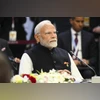 "PM Modi, environment minister unlikely to attend UN climate summit in Baku")
Explore Business Standard
Union Minister of State for Environment, Forest and Climate Change Kirti Vardhan Singh will lead the 19-member Indian delegation and deliver India's national statement
Prime Minister Narendra Modi is unlikely to attend the UN climate conference in Azerbaijan that Environment Minister Bhupender Yadav may also miss, official sources said on Thursday.
Union Minister of State for Environment, Forest and Climate Change Kirti Vardhan Singh will lead the 19-member Indian delegation and deliver India's national statement at the high-level segment on November 18-19.
India will not host a pavilion at COP29, marking its first absence since the 2021 UN climate conference in Glasgow.
Modi will not attend the World Leaders' Climate Action Summit at COP29, scheduled for November 12-13, an official source confirmed to PTI.
Yadav is expected to skip the climate conference as he will be occupied with the November 20 assembly elections in Maharashtra where he is the BJP's in-charge.
According to sources, India's key priorities for COP29 include securing an ambitious new climate finance goal that meets the needs of all developing countries and the operationalisation of Article 6 of the Paris Agreement.
At COP29 in the Azerbaijan capital Baku, countries are required to reach an agreement on the New Collective Quantified Goal (NCQG) -- the new amount developed nations must mobilise every year starting 2025 to support climate action in developing countries.
Article 6 establishes a framework for countries to trade carbon credits generated from reducing their greenhouse gas emissions, thereby helping other nations in achieving their climate goals.
The sources further said that India sought to ensure negotiations remained within the framework of the UN climate change convention and the Paris Agreement.
Developed nations are pushing to expand the list of contributors to climate finance, with countries such as Switzerland and Canada proposing criteria to broaden the donor base.
Negotiators and policy experts from developing countries argue that expanding the climate finance contributor base exceeds the mandate for NCQG and may disrupt negotiations on the new finance goal.
Developing countries have also voiced strong opposition to unilateral trade measures, such as the European Union's Carbon Border Adjustment Mechanism (CBAM), asserting that, under UN climate rules, no nation should impose emission reduction strategies on others.
China, representing the BASIC group of countries (Brazil, South Africa, India and China), has submitted a proposal to the UNFCCC, requesting that COP29 address this issue.
(Only the headline and picture of this report may have been reworked by the Business Standard staff; the rest of the content is auto-generated from a syndicated feed.)
First Published: Nov 07 2024 | 6:38 PM IST


