
Reduction in vehicular movement on roads after Grap-4 imposed: Delhi govt
Following the government's directives, a noticeable reduction in vehicular movement was observed on Delhi's roads compared to normal days
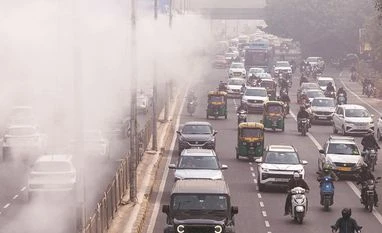 "Reduction in vehicular movement on roads after Grap-4 imposed: Delhi govt")
Explore Business Standard
Following the government's directives, a noticeable reduction in vehicular movement was observed on Delhi's roads compared to normal days
The Delhi government on Thursday said a noticeable reduction in vehicular movement was observed on the city roads following strict enforcement of anti-pollution measures under Grap-4, with increased public compliance with the Pollution Under Control (PUC) norms.
In response to rising air pollution levels in the capital, the Delhi government on Thursday undertook a comprehensive monitoring exercise to assess the impact of the stringent measures implemented for pollution control, said an official statement.
Chief Minister Rekha Gupta reviewed feedback received from her cabinet colleagues and their respective departments, and observed that the measures implemented by the government have delivered positive results on the ground.
Following the government's directives, a noticeable reduction in vehicular movement was observed on Delhi's roads compared to normal days.
In a significant trend, a large number of vehicle owners voluntarily obtained Pollution Under Control (PUC) certificates, which the government termed a positive indicator of growing public awareness.
The Delhi government asserted that it is fully complying with the directions issued by the Commission for Air Quality Management (CAQM). In accordance with these directions, Stage IV of the Graded Response Action Plan (Grap-4) is currently in force in the capital.
Under Grap-4, intensive inspection and enforcement drives were conducted, and strict action was taken against violations, the statement said.
According to a joint report of the Delhi Transport Department and the Delhi Traffic Police, a total of 210 enforcement teams were deployed for this special drive, including 126 teams of the Delhi Traffic Police and 84 teams of the Delhi Transport Department. During the campaign, stringent action was taken against vehicles operating without valid PUC certificates, with a total of 3,746 challans recorded against such vehicles.
The government said monitoring and strict enforcement will continue in the days ahead to reduce vehicular emissions and provide immediate relief to public health.
(Only the headline and picture of this report may have been reworked by the Business Standard staff; the rest of the content is auto-generated from a syndicated feed.)
First Published: Dec 19 2025 | 6:50 AM IST


