The Supreme Court on Thursday brought the curtain down on one of India's longest-running and politically significant corruption cases by dismissing the last surviving appeal against the 2005 Delhi High Court judgment that quashed criminal proceedings in the Bofors case.
With the dismissal, the nearly 40-year-old prosecution has reached its legal closure.
A Bench of Justices JB Pardiwala and K Vinod Chandran refused to entertain the appeal of advocate and BJP leader Ajay K Agrawal against the Delhi High Court's 2005 verdict. The order had exonerated the three
Hinduja brothers — Srichand P Hinduja, Gopichand P Hinduja and Prakash P Hinduja — and Swedish arms manufacturer AB Bofors.
What happened in court?
At Thursday's hearing, Agrawal, appearing virtually, sought four weeks to delete the names of the deceased respondents, Srichand and Gopichand Hinduja, from the case records. Prakash Hinduja, chairman of the Hinduja Group in Europe, remains the surviving respondent among the brothers.
The Bench, however, questioned the very basis for continuing the proceedings.
"What is all this about the Hinduja brothers and CBI?" the judges asked.
After being informed that the Delhi High Court had already quashed the proceedings more than two decades ago, the Bench remarked, "All proceedings were quashed. What is this? How many years have passed?"
Agrawal argued that the Central Bureau of Investigation's (CBI) own appeal had earlier been dismissed because the agency had already been made a respondent in his petition and had been permitted to advance its arguments in his case.
"No, no... dismissed," the Bench observed after remaining unconvinced.
When Agrawal sought an adjournment, the court refused, saying, "No question of adjournment. It is a 2018 matter," before dismissing the appeal.
Why was this the last pending case?
The appeal was the only surviving challenge to the Delhi High Court's May 31, 2005, judgment, in which Justice RS Sodhi quashed all criminal proceedings against the Hinduja brothers and AB Bofors.
The High Court had criticised the CBI's handling of the investigation, observing that nearly ₹250 crore had been spent on a prosecution that ultimately failed to establish a prima facie case against the accused.
In November 2018, the Supreme Court had already dismissed the CBI's own appeal against the 2005 judgment after refusing to condone a delay of 4,522 days in filing it. The court held that the investigating agency had failed to satisfactorily explain the "extraordinary" delay, though it had allowed the CBI to present its submissions in Agrawal's pending appeal.
The Supreme Court had also questioned Agrawal's locus in 2018, asking how a private individual could maintain an appeal in a criminal prosecution after the investigating agency's own challenge had failed.
What was the Bofors scandal?
The Bofors scandal stemmed from a ₹1,437-crore defence contract signed on March 24, 1986, under which India agreed to buy 400 155 mm howitzer guns from Swedish company AB Bofors. The controversy began in April 1987 after Swedish Radio alleged that illegal commissions had been paid to influential Indian politicians, defence officials and middlemen to secure the contract, despite India's policy prohibiting such payments. The allegations severely dented then Prime Minister Rajiv Gandhi's clean image and became a defining issue in the 1989 Lok Sabha election, in which the Congress lost power.
How the case unfolded
The CBI registered an FIR in January 1990 alleging criminal conspiracy, cheating, forgery and corruption against former Bofors president Martin Ardbo, alleged middleman Win Chadha and others. Italian businessman Ottavio Quattrocchi and the Hinduja brothers were later named in the investigation, with the brothers being added through a supplementary charge sheet in October 2000.
In February 2004, the Delhi High Court cleared former Prime Minister Rajiv Gandhi of any criminal culpability in the case while directing that a forgery charge be framed against the Bofors company.
Quattrocchi was discharged by a Delhi trial court in 2011 after repeated extradition efforts failed. He died in 2013. Several other accused, including Win Chadha, Martin Ardbo and former Defence Secretary SK Bhatnagar, also died during the prolonged proceedings.

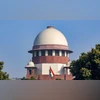 "SC closes Bofors case, rejects final plea against 2005 Hinduja acquittal")

