
SC refuses to entertain PIL against special treatment for VIPs in temples
The top court was hearing a plea filed by Vijay Kishor Goswami, 'sevait' at Shri Radha Madan Mohan Temple in Vrindavan, on the issue
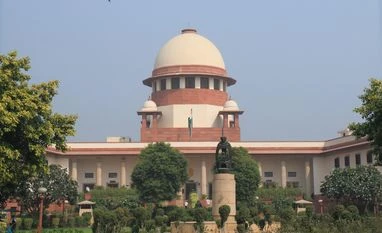 "SC refuses to entertain PIL against special treatment for VIPs in temples")
WebinarsNew
Deep DiveNew
Explore Business Standard
The top court was hearing a plea filed by Vijay Kishor Goswami, 'sevait' at Shri Radha Madan Mohan Temple in Vrindavan, on the issue
The Supreme Court on Friday refused to entertain a PIL against the practice of charging an additional fee for "VIP darshan" and according of preferential, selective and special treatment to a certain class of people in temples.
A bench comprising Chief Justice Sanjiv Khanna and Justice Sanjay Kumar said it was for the society and temple management to decide the issue and the court cannot pass any direction.
"While we may be of the opinion that no special treatment should be given but this court cannot issue directions. We do not think it is a fit case to exercise jurisdiction under Article 32 of the Constitution. However, we clarify that dismissal of the petition will not bar the appropriate authorities from taking appropriate action as required," the bench said.
Advocate Akash Vashishtha, representing the petitioner, argued there is some Standard Operating Procedure required as there are 12 Jyotirlingas and this completely arbitrary practice of "VIP darshan".
The top court was hearing a plea filed by Vijay Kishor Goswami, 'sevait' at Shri Radha Madan Mohan Temple in Vrindavan, on the issue.
The plea said the practice violated the principles of equality enshrined in Articles 14 and 21 of the Constitution, as it discriminated against devotees unable to afford the fee.
The petition also raised several concerns about the additional fee charged for an expedited access to temple deities.
The plea said charging fee ranging between Rs 400 and Rs 500 for the special darshan privileges created a divide between the affluent devotees and those who were unable to afford such charges, particularly disadvantaged women, persons with disabilities, and senior citizens.
It said that despite representations made to the home ministry, only a directive was issued to Andhra Pradesh, while other states like Uttarakhand, Uttar Pradesh, and Madhya Pradesh remained unaddressed.
The plea, therefore, sought a direction to declare the levying of the additional fee violative of the constitutional rights of equality and religious freedom.
It sought directions to ensure equal treatment for all devotees in temple premises and framing of standard operating procedures by the Centre to ensure equitable access to temples.
The plea further sought setting up of a national board to oversee the management and administration of temples nationwide.
(Only the headline and picture of this report may have been reworked by the Business Standard staff; the rest of the content is auto-generated from a syndicated feed.)
First Published: Jan 31 2025 | 1:35 PM IST

