Supreme Court calls out states for freebies while judges face pay delays
The top court noted the contradiction of neglecting judges' salaries, while making large election promises
Nandini Singh New Delhi As the
Delhi Assembly elections approach, the Supreme Court has raised a strong concern over the growing trend of state governments offering election freebies, while neglecting the pressing issue of unpaid judges' salaries and pensions, reported India Today.
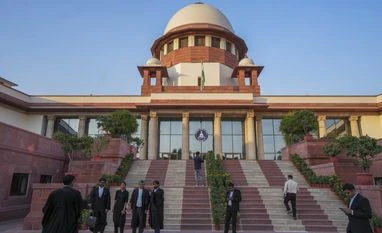
The Supreme Court bench, led by Justices BR Gavai and AG Masih, was hearing a plea from the All India Judges Association, which pointed out the growing concern over the insufficient salaries and inadequate retirement benefits provided to the country’s judiciary.
The bench made an important observation, bringing attention to the contradictions between the allocation of funds for election promises and the financial neglect faced by the judicial system, the report stated.
“When it comes to paying judges, states often cite financial constraints. However, during elections, we see announcements of freebies like the 'Ladki Bahin' initiative and similar financial promises made by political parties in Delhi, where assurances of paying Rs 2,100 or Rs 2,500 are made to win elections,” the bench said.
The 'Ladki Bahin' initiative, launched by Maharashtra’s ruling BJP-led Mahayuti coalition, is one such example of election promises aimed at securing votes. Similarly, political parties in Delhi have also jumped on the bandwagon, making significant promises for the upcoming Assembly elections.
In Delhi, the ruling AAP (Aam Aadmi Party) has introduced the 'Mukhya Mantri Mahila Samman Yojana,' where women would receive a monthly assistance of Rs 2,100, contingent upon the party securing a third consecutive term. In a bid to challenge AAP’s promise, the Delhi Congress has also announced its own plan to offer Rs 2,500 per month to women in Delhi if it comes to power.
These political manoeuvers have sparked debate as voters look for promises of economic relief in a highly competitive election race. The Assembly elections in Delhi, scheduled for February 5, will see voters casting their ballots across 70 constituencies. The results will be counted on February 8, and the last date to file nominations is January 17, with nominations being scrutinised by January 18.

 "Supreme Court calls out states for freebies while judges face pay delays")


