4 min read Last Updated : Sep 19 2023 | 1:20 PM IST
Canadian Prime Minister Justin Trudeau declared that there is "credible evidence" implicating agents of the Indian government in the murder of Canadian citizen Hardeep Singh Nijjar in June during a session in the House of Commons.
Two "heavy-set suspects" were believed to be the assailants, with a third suspect serving as the getaway driver, according to the Royal Canadian Mounted Police's integrated homicide investigation team. No suspects have been apprehended to date.
Trudeau firmly stated, "Any involvement of a foreign government in the killing of a Canadian citizen on Canadian soil is an unacceptable violation of our sovereignty."
Following Trudeau's statement in Parliament, Canadian Foreign Minister Melanie Joly announced the expulsion of a senior Indian diplomat from Canada.
India responded by expelling a Canadian diplomat, marking a tit-for-tat diplomatic row. India's Ministry of External Affairs (MEA) stated that the expulsion was a result of Canadian diplomats' interference in Indian internal matters,
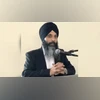
Who was Hardeep Singh Nijjar?
Nijjar was a Sikh leader based in Surrey, BC, who was fatally shot outside his gurdwara on June 18. According to a report by Global News, a Canadian news portal, Nijjar worked as a plumber and also served as the president of the Sikh temple, where he was killed. He arrived in Canada in 1997 and initially claimed refugee status using a false passport. Despite his refugee claim being rejected, he married a woman who sponsored his immigration. However, this too was rejected.
Nijjar advocated for a referendum on Khalistan, a separate Sikh state in India's Punjab region and was instrumental in organising an unofficial referendum among the Sikh diaspora in Surrey.
In 2016, Nijjar was accused of being linked to a 2007 bombing in Punjab by the state's police and an FIR was also filed. The bombing resulted in six deaths and 42 injured in Ludhiana, Punjab. At the time, the Punjab Police was concerned with Canada "sheltering Khalistani terrorists". This case was eventually handed to the National Investigation Agency (NIA).
In 2018, the NIA registered two cases in connection with the 2016 terrorist attack in Punjab and a second for conspiring to attack alleged right-wing leaders in India against Nijjar.
Nijjar was also accused of leading the Khalistan Terror Force and running training camps in British Columbia to prepare sympathisers for potential terror attacks in India. Nijjar strongly denied these accusations and claimed to be a peaceful activist.
Hardeep Singh Nijjar was killed in June 2023. His lawyer, Gurpatwant Singh Pannun, revealed that the Canadian Security Intelligence Service (CSIS) had recently informed Nijjar about threats to his life. Following his murder, there were immediate speculations regarding the Indian government's involvement.
However, Prime Minister Trudeau asserted that Canada possesses credible information linking India to the murder, which he raised with Prime Minister Narendra Modi during a recent G20 meeting in India.
India rejects allegations
India categorically rejected Trudeau's claim, deeming it "baseless." The Indian Ministry of External Affairs stated that allegations of Indian government involvement in violence in Canada are "absurd and motivated." It emphasised India's commitment to the rule of law and pointed to the sheltering of Khalistani terrorists and extremists in Canada as a pressing concern.
"Such unsubstantiated allegations seek to shift the focus from Khalistani terrorists and extremists, who have been provided shelter in Canada and continue to threaten India's sovereignty and territorial integrity...The inaction of the Canadian Government on this matter has been a long-standing and continuing concern," the MEA said.
The ministry, in its statement, added, "We urge the Government of Canada to take prompt and effective legal action against all anti-India elements operating from their soil."

 "Who was Hardeep Singh Nijjar and why his murder has led to a diplomatic row")


