Why the public charging infra needs to catch up with the rise of EVs

According to data from OMI Found­at­ion's EV dashboard, India has 10,185 charg­ing stations comprising 17,094 charging points
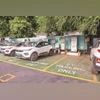
Electric vehicle
GIVE WAY: India currently has a ratio of one charger for every 13 cars, a contrast to China’s ratio of one charger for every four cars
Nitin Kumar New Delhi
7 min read Last Updated : Nov 14 2023 | 10:17 PM IST
Kapil Singh — not his real name — be­came a contractual driver with a state-run outfit in the National Ca­pital Region of Delhi. He was ex­cited to be taking the wheel at an electric vehicle (EV) made by one of the country’s fo­remost carmakers. It came with a 15-ampere charger that took the battery from zero to full in seven hours. And the EV could travel 250 km or so on one full charge. Singh would not tire of praising his vehicle before his friends.

His fervour dimmed a little when he faced an unexpected roadblock when his charger began to malfunction. He first thought he would charge his EV at a state-run charging station. However, he soon discovered that his EV came with a Combined Charging System Type 2 (CCS-II) charger. The government charging stations supported the Bharat Standard.

Desperate for a solution, Singh contacted his supervisor, who advised him to take the car to another office complex in New Delhi. He promptly landed up there only to find himself at the back of a long queue, the kind usually seen at CNG filling stations, only this one was a little longer.

Soon, Singh began to set aside a chunk of time in his daily routine after dropping his boss at his office, to get his EV’s battery charged. “At times, I had to request my boss to call a taxi since the car’s battery was depleted. I am fortunate that my boss did not reprimand me,” he says.

Business Standard spoke to nearly a dozen persons who drive EV taxis. All of them tell stories similar to Singh’s, of not finding the right charger on the go and having to find their way through the combinations of charging stations, charging points, and charger types.

India currently has a ratio of one charger for every 13 cars, a contrast to China’s ratio of one charger for every four cars when it crossed the 100,000-units mark in sales in 2015. Europe and the United States have a charger for every three and six vehicles, respectively, shows data from the International Energy Agency.

Another hurdle in the realm of public charging is the scarcity of fast charging opt­ions. According to an analysis by NRI Con­sulting and Solutions, a mere 20 per cent of the public charging stations in India cur­rently provide DC fast charging services.

According to the Bureau of Energy Efficiency’s website, India has two types of AC (slow or moderate) chargers: Bharat AC-001 and Type-2 AC. There are three types of DC (fast chargers): Bharat DC–001, CHAdeMO, and CCS-II.

The 30kW DC public charger takes around 60 minutes to fully charge an EV with a 30 kWh battery. In contrast, the on-board charger, rated at 3.2kW, can take 10 hours for a full charge. Additionally, customers have the option of installing a 7.4 kW type-2 AC fast charger at home, which reduces the charging time to four hours for a full charge.

According to data from OMI Found­at­ion’s EV dashboard, India has 10,185 charg­ing stations comprising 17,094 charging points. Of these, 8,168 are fast-chargers, with power outputs ranging from 15 kW to 500 kW. The remaining chargers offer slow or moderate charging, requiring more than six hours to charge a vehicle.

Amar Kumar, who, like Singh, would not reveal his real name, drives an EV for a ride aggregator. The fast BEVC-DC001 charger (Bharat standard) works well with his old EV, but if the battery charge goes below 20 per cent, he has to use his Type-2 AC charger. “We are told the cars get charged in around one hour, but I have seen it take three hours, as it first uses slow charger and then fast charging,” says Kapil.

The lack of standardisation has kept EV owners and drivers in a state of worry. The high cost of fast charger installation and uncertainty about standards also make it difficult for operators of charging points.

“India annually sells only 50,000 EVs cu­rrently. The cost of installing fast chargers ranges from Rs 30 lakh to Rs 60 lakh, depending on their power output. The lack of stand­ard­isation limits investment options. We are now investing in CCS2, as several new cars adhere to this standard. However, if some other standard takes the lead in the future, the landscape could change,” explains a charging station operator.

DC chargers are compatible with cars and buses. Two-wheelers and three-wheelers use slow and moderate charging, which resulted in the proliferation of thousands of charging adapters. All these vehicles are charged by the 15-ampere charging socket, which is compatible with home and public slow and moderate charging of 7 kW to 11 kW.

The relatively sparse charging infrastructure in India could impede widespread adoption of electric cars and hinder India's progress towards its sustainability goals, say experts. A World Bank analysis found that investing in charging infrastructure is four to seven times more effective in EV adoption than providing upfront purchase subsidies.

Meanwhile, Kapil Singh, the ardent advocate of EVs not too long ago, is now a fervent seeker of a standardised charging infrastructure.

Driving the transition

As India pursues its sust­a­inability goals, EVs have emerged as a central component. Their backbone is the network of diverse charging solutions. The consumer charging options predominantly include home charging and public charging. Mean­while, inadequate infrastructure has led to the emergence of battery swapping and portable mobile charging services.

According to a McKinsey re­port, “Consumers are driving the transition to electric cars in India”, released in September, Indian consumers show almost equal affinity for public and home charging (58 per cent and 42 per cent, respectively) despite appreciating the latter as being cheaper, more convenient, and more accessible.

Upon purchasi­ng an EV, consu­m­ers receive a charger that is compatible with their home infrastruct­ure. The public charging infra, on the other hand, comes in handy when consumers req­u­ire a charge while on the move or when they seek rapid charging.

According to data from the Bureau of Energy Efficiency, the country currently has 10,186 operational public charging stations. Of these, 4,284 are administered by public sector undertakings (PSUs), including entities such as IndianOil e-Charge Station, Hindustan Petroleum Corporation, Convergence Energy Services Limited, and the Kerala State Electricity Board. The remaining fall under the purview of private sector operators, with Ujoy Technology, Tata Power, and Kazam emerging as the leading players.

The government is believed to be preparing a standardised charging protocol in response to concerns voiced by industry stakeholders. The proposal is to introduce either a single charging standard applicable to all types of EVs or, alternatively, two standards: One for two- and three-wheelers and another for four-wheelers. The government has also released its plans to develop a battery swapping policy with the goal of minimising wait times and enhancing the overall customer experience.

The emergence of swappable vehicle models from Piaggio, Omega Seiki, and others in the pipeline is anticipated to expand the adoption of battery swapping, especially among e3W vehicles.

“In this domain, Battery Smart and Chargeup are noteworthy players, providing swapping services for e2W and e-rickshaws. Battery Smart, in par­ticular, has a substantial presence with over 770 swap stations, primarily concentrated in the Delhi-National Capital Region. However, e2W swappable charging options remain limited, with only a few models, such as the Hero Vida, currently offering this feature,” noted Preetesh Singh, a specialist in CASE and alternate powertrains at NRI Consulting and Solutions.

Several startups, including Hopcharge and Mobec, are also competing to establish themsel­ves by offering door-to-door fast charging and other services.


One subscription. Two world-class reads.

Already subscribed? Log in

Subscribe to read the full story →
*Subscribe to Business Standard digital and get complimentary access to The New York Times

Smart Quarterly

₹900

3 Months

₹300/Month

SAVE 25%

Smart Essential

₹2,700

1 Year

₹225/Month

SAVE 46%
*Complimentary New York Times access for the 2nd year will be given after 12 months

Super Saver

₹3,900

2 Years

₹162/Month

Subscribe

Renews automatically, cancel anytime

Here’s what’s included in our digital subscription plans

Exclusive premium stories online

  • Over 30 premium stories daily, handpicked by our editors

Complimentary Access to The New York Times

  • News, Games, Cooking, Audio, Wirecutter & The Athletic

Business Standard Epaper

  • Digital replica of our daily newspaper — with options to read, save, and share

Curated Newsletters

  • Insights on markets, finance, politics, tech, and more delivered to your inbox

Market Analysis & Investment Insights

  • In-depth market analysis & insights with access to The Smart Investor

Archives

  • Repository of articles and publications dating back to 1997

Ad-free Reading

  • Uninterrupted reading experience with no advertisements

Seamless Access Across All Devices

  • Access Business Standard across devices — mobile, tablet, or PC, via web or app

Topics :Electric VehiclesChargingElectric vehicles in Indiainfrastructure

Next Story


