
Will not give assent to University Laws Amendment Bill: Kerala Governor
Speaking to the reporters, he said that the purpose of appointing the governor as chancellor in Universities of all the states was to avoid a university-to-executive interface
 "Will not give assent to University Laws Amendment Bill: Kerala Governor")
WebinarsNew
Deep DiveNew
Explore Business Standard
Speaking to the reporters, he said that the purpose of appointing the governor as chancellor in Universities of all the states was to avoid a university-to-executive interface
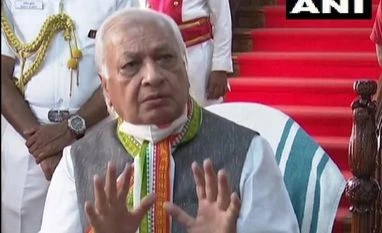
Reacting to the University Laws (Amendment) Bill, 2022, Governor Arif Mohammed Khan on Monday said that he would "not give assent" to the bill as it goes against the spirit of the Constitution.
Speaking to the reporters, he said that the purpose of appointing the governor as chancellor in Universities of all the states was to avoid a university-to-executive interface.
"The purpose of appointing the governor as chancellor in Universities of all the states was to avoid university-to-executive interface. The universities are being controlled by them (Government). More than half of the universities have no regular vice-chancellor...I don't know what's going to happen. This bill goes against the spirit of the Constitution and the law, and I will not give assent to it (University Laws Amendment Bill)," said Arif Mohammed Khan.
Kerala Assembly passed the University Laws (Amendment) Bill, 2022 on December 13.
Kerala Law Minister P Rajeev on December 7 last year introduced an amendment in the Assembly whereby a new Chancellor can be decided by a three-member committee comprising the chief minister, the leader of the Opposition, and the Speaker.
According to the amendment Bill introduced in the Assembly, "The government shall appoint an academician of high repute or a person of eminence in any of the fields of science including agriculture and veterinary science, technology, medicine, social science, humanities, literature, art, culture, law or public administration as the chancellor of the university."
Chancellor is appointed for a period of five years and it is mandated that the person so appointed shall be eligible for reappointment for one or more terms. The Chancellor may resign his office by an intimation in writing to the government.
(Only the headline and picture of this report may have been reworked by the Business Standard staff; the rest of the content is auto-generated from a syndicated feed.)
First Published: Jun 20 2023 | 8:19 AM IST

