
Govt revises crop residue management guidelines
The beneficiary or aggregator can be farmers, rural entrepreneurs, cooperative societies of farmers, Farmer Producer Organisations (FPOs), and panchayats, agriculture ministry said
 "Govt revises crop residue management guidelines")
WebinarsNew
Deep DiveNew
Explore Business Standard
The beneficiary or aggregator can be farmers, rural entrepreneurs, cooperative societies of farmers, Farmer Producer Organisations (FPOs), and panchayats, agriculture ministry said
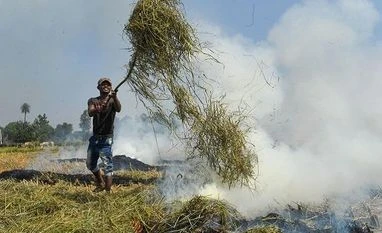
The government on Saturday said it has revised the crop residue management guidelines, thus enabling efficient ex-situ management of paddy straw generated in Punjab, Haryana, Uttar Pradesh and Delhi.
As per the revised guidelines, techno-commercial pilot projects for paddy straw supply chain will be established under the bilateral agreement between the beneficiary/aggregator and industries utilising the paddy straw, the agriculture ministry said in a statement.
The beneficiary or aggregator can be farmers, rural entrepreneurs, cooperative societies of farmers, Farmer Producer Organisations (FPOs), and panchayats, it said.
According to the ministry, the move will supplement the efforts of paddy straw management through in-situ options.
During the three-year tenure of the interventions, 1.5 million tonne of surplus paddy straw are expected to be collected which would otherwise have been burnt in fields.
About 333 biomass collection depots of capacity 4,500 tonne will be built in Punjab, Haryana, Uttar Pradesh, and Madhya Pradesh. Air pollution caused by stubble burning will be considerably reduced. It would also generate employment opportunities of about 9,00,000 man-days.
As per the revised guidelines, the government will provide financial assistance on the capital cost of machinery and equipment.
The required working capital may be financed either by the industry and beneficiary jointly or utilising the Agriculture Infrastructure Fund (AIF), NABARD, or financial institutions by the beneficiary, it said.
The land for storage of the collected paddy straw will be arranged and prepared by the beneficiary as may be guided by the end-use industry.
Project proposal-based financial assistance will be extended for machines and equipment such as higher HP tractors, cutters, tedder, medium to large balers, rakers, loaders, grabbers and tele-handlers which are essentially required for the establishment of paddy straw supply chain.
"State governments shall approve these projects through project sanctioning committee," the ministry said.
The Centre and state governments will jointly provide financial support of 65 per cent of the project cost, while the industry as primary promoter of the project will contribute 25 per cent.
The industry will act as the 'primary consumer' of the feedstock collected and farmer or aggregator will be the direct beneficiary of the project and will contribute the balance 10 per cent, it added.
This intervention will encourage a robust supply chain management of paddy straw which will further help in making paddy straw available for various end-uses e.e power generation, heat generation, and bio-CNG.
(Only the headline and picture of this report may have been reworked by the Business Standard staff; the rest of the content is auto-generated from a syndicated feed.)
First Published: Jul 01 2023 | 6:26 PM IST

