India's soybean production may drop due to erratic rain: Industry officials
India uses soybeans to manufacture soyoil, which helps the country cut its hefty edible oil imports, while the by-product soymeal is used for animal feed and exported mainly to Southeast Asia
Reuters NEW DELHI India's soybean production is expected to drop as patchy monsoon rains in August stunted the crop in some key growing areas, industry officials and farmers said on Thursday.
India uses soybeans to manufacture soyoil, which helps the country cut its hefty edible oil imports, while the by-product soymeal is used for animal feed and exported mainly to Southeast Asia.
Farmers grow soybeans once a year during the monsoon season in June and July and harvest the main summer oilseed crop from October.
Indian farmers planted 12.5 million hectares of soybean this year, compared with 12.4 million hectares in the year-ago period, according to the farm ministry's latest data on crop sowing.
"The rainfall deficit is likely to result in lower yields, and that's why I believe that soybean production could be lower than last year," said B.V. Mehta, executive director of the Mumbai-based industry body the Solvent Extractors' Association of India (SEA).
Although rains have revived, some regions are still dry in western India, he said.
Monsoon rains, critical for the soybean crop, came in 36% below average in August, although rains have revived this month to rebound to 7% above average.
"Despite a late start of the monsoon in June, the crop was quite good until August when a prolonged dry spell hit the crop," Mehta said.
Madhya Pradesh, Maharashtra and Rajasthan are some of India's top soybean-producing states.
"The crop suffered a lot of moisture stress when it didn't rain for two weeks in August. As rains revived in September, some of the losses have been recouped," said Rameshar Singh, an oilseed grower from the central state of Madhya Pradesh.
Despite the lower output, soybean supplies will come in higher than the demand as stockpiles at the start of the new marketing year are expected to be anywhere between 1.5 million tonnes and 2 million tonnes, Mehta said.
(Reporting by Mayank Bhardwaj; Editing by Sherry Jacob-Phillips)
(Only the headline and picture of this report may have been reworked by the Business Standard staff; the rest of the content is auto-generated from a syndicated feed.)

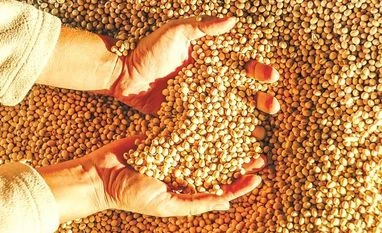 "India's soybean production may drop due to erratic rain: Industry officials")

