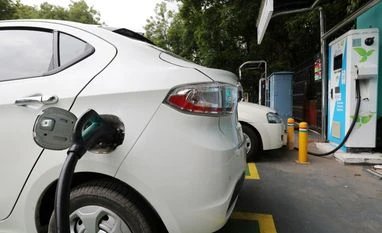
Electric vehicle (EV) sales this year have witnessed a robust increase of over 45 per cent so far, notwithstanding the subsidy cuts and regulatory shifts. Total EV registration figure in 2023 is just shy of 1.5 million units, significantly higher than last year’s score of a little over 1 million.
All this has pushed the overall EV penetration in the country beyond 5 per cent – to 6.3 per cent against 4.8 per cent in 2022.
This year was marked by a reduction in subsidies for electric two-wheelers (e2Ws), a category that makes up around 55 per cent of total EV sales. Industry experts attribute the sales surge this year to a shift in consumer interest towards more environmentally friendly vehicles. This change has also been influenced by a flurry of product launches by startups in the two- and three-wheeler (e3W) segments, coupled with an increased availability of vehicles in the four-wheeler category.
Government incentives have also played a pivotal role in propelling this growth, they noted.
“The confidence of customers in the e2W and e3W categories has been bolstered not only by startups but also by established players in the internal combustion engine (ICE) space introducing new products. Government subsidies, improved financing options, and the increase in battery swapping facilities have further facilitated the expansion of the industry,” said Preetesh Singh, specialist CASE and alternate powertrains, NRI Consulting & Solutions.
The e3W category led the charge in market penetration, reaching a 53 per cent mark, up from 51 per cent last year.
“In 2023, the EV market, especially the three-wheeler segment, transitioned from concept to reality. Overcoming previous challenges like range anxiety and limited choices, the sector experienced a surge in demand,” said Ayush Lohia, CEO, Lohia Auto, an e3W manufacturer.
Though passenger cars exhibited the lowest penetration across all categories, their penetration doubled this year to 2 per cent. In the two-wheeler category, penetration increased this year to 5 percent versus 4 percent last year.
The bus segment, on the other hand, struggled; its penetration stood at 3.3 per cent this year against 4.6 per cent last year.
Despite the overall increase in penetration, industry players argued the uptick was not deemed significant due to the government’s decision in June to reduce subsidies to a third of the maximum Rs 66,000 subsidy it was offering on an e2W. Following the government’s decision to cap the maximum subsidy for e2Ws at Rs 22,500 apiece, sales experienced a sharp decline of over 35 per cent in June, dropping from an all-time high of 158,000 recorded in May.
“The sales of EVs could have reached the two million mark this year had the government not reduced the subsidy for e2Ws. The subsidy cut set the industry back by at least one year,” said an industry player.
However, government officials contended that the subsidy cut was essential as it could not be sustained indefinitely. They asserted that sales of EVs have not only recovered but also returned to pre-subsidy cut levels. “Sales are poised to exceed the all-time high, indicating that the industry is becoming self-sufficient. The recovery suggests that with companies introducing more affordable products, sales are expected to soar even higher," a senior official said.
In November, EV registrations reached 153,000, just 3 per cent off the all-time high in May. Also, despite the subsidy cut, 2023 would mark the first year when sales of EVs consistently remained above 100,000 units each month.