BMW Industries plans B2B steel products' market foray: MD Harsh Bansal

With this new venture, the company aims to leverage its existing strengths in downstream steel processing to cater to the rising demand in the country
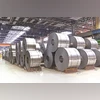
steel, steel industry
The production capacity will include 2 lakh tonnes per annum (TPA) for colour-coated coils or sheets, 3 lakh TPA for cold-rolled full hard sheets, and 5.4 lakh TPA for galvanised coils.
Puja Das New Delhi
4 min read Last Updated : Apr 20 2025 | 10:07 PM IST
BMW Industries (BMWIL), one of India’s largest steel processing companies, plans to enter the steel products market at the business-to-business (B2B) level, Harsh Bansal, managing director of the company, told Business Standard in an interview.
 
The Kolkata-based company aims to leverage its existing strength in downstream steel processing to cater to the rising demand in the country, according to Bansal.  
 
Currently, BMWIL serves as a service provider for steelmakers, offering manufacturing services. Now, the company plans to buy raw materials, process them into finished products at its upcoming Bokaro plant, and sell them.
 
The over three-decade old company has six manufacturing and processing units in West Bengal’s Kolkata and Asansol and one in Jharkhand’s Bokaro for HRPO Coils, CR Coils, GP Coils, GC Sheets, MS and GI pipes, TMT rebars and other steel products.
 
“The natural progression for our business is to establish our own outlet. In Bokaro, we are setting up a cold rolling mill complex to produce specific value-added downstream products. This new venture will continue to focus on B2B,” Bansal explained.
 
At present, it is a processing partner for leading steel manufacturers, including Tata Steel, and operates a joint venture with Steel Authority of India Limited.
 
The plant is expected to be fully operational in stages over the next two years, with the first phase, which will produce colour-coated steel sheets, set to begin by the third quarter of 2025-26 (FY26).
 
Production will include 2 lakh tonnes per annum (TPA) for colour-coated coils or sheets, 3 lakh TPA for cold-rolled full hard sheets, and 5.4 lakh TPA for galvanised coils. 
 
The estimated project cost is ₹803.47 crore, funded through a combination of internal accruals and debt.
 
Last month, the downstream steel manufacturer signed a production-linked incentive agreement with the Ministry of Steel to manufacture coated or plated steel products, including metallic and non-metallic alloys and galvalume products.
 
According to Bansal, BMW Industries’ entry into the product segment will help address the supply gap in the domestic market.
 
For instance, when leading steelmakers announce plans to increase capacity by 4-5 million tonnes, it takes time. They make their plans today but by the time they expand their capacity in four years, the market has evolved.
 
This gap always remains. Moreover, steel manufacturers need to allocate their new capacity among various product offerings, as they are not just increasing production in a single area, Bansal said.
 
“Steelmakers see the market from a bird’s-eye view, while my focus is more specific. Today, the current defence requirements are substantial. From an economic standpoint, we will assess if it makes sense to produce special grade high-strength steel for defence applications or galvanised coated steel for the general market. Our strategy will be to focus on whatever product has the highest market demand,” he added.
 
Once the plant is fully operational, the company will also explore exporting its products.
 
Although Bansal did not disclose revenue figures for the fourth quarter (Q4) of FY25, stating that the company is in a silent period, he mentioned, “With the new plant, we anticipate that revenue dynamics will shift in the next two to three years, as we transition from pure processing and services to product sales.”
 
In Q3FY25, BMWIL reported a nearly 2.5 per cent year-on-year (Y-o-Y) increase in revenue, reaching ₹148.8 crore, while net profit surged by nearly 50 per cent Y-o-Y to ₹17.23 crore. 
 
The net profit margin increased 46.32 per cent Y-o-Y to 11.58 per cent. 
 
However, compared to the previous quarter, revenue declined 2.68 per cent and net profit fell 3.53 per cent.

One subscription. Two world-class reads.

Already subscribed? Log in

Subscribe to read the full story →
*Subscribe to Business Standard digital and get complimentary access to The New York Times

Smart Quarterly

₹900

3 Months

₹300/Month

SAVE 25%

Smart Essential

₹2,700

1 Year

₹225/Month

SAVE 46%
*Complimentary New York Times access for the 2nd year will be given after 12 months

Super Saver

₹3,900

2 Years

₹162/Month

Subscribe

Renews automatically, cancel anytime

Here’s what’s included in our digital subscription plans

Exclusive premium stories online

  • Over 30 premium stories daily, handpicked by our editors

Complimentary Access to The New York Times

  • News, Games, Cooking, Audio, Wirecutter & The Athletic

Business Standard Epaper

  • Digital replica of our daily newspaper — with options to read, save, and share

Curated Newsletters

  • Insights on markets, finance, politics, tech, and more delivered to your inbox

Market Analysis & Investment Insights

  • In-depth market analysis & insights with access to The Smart Investor

Archives

  • Repository of articles and publications dating back to 1997

Ad-free Reading

  • Uninterrupted reading experience with no advertisements

Seamless Access Across All Devices

  • Access Business Standard across devices — mobile, tablet, or PC, via web or app

Topics :Steel Authority of IndiaSteel sectorSteel Market

Next Story



