Centre charting 5-year road map to boost ethanol blending in petrol

Panel to submit report on taking blending beyond 20%
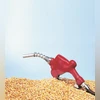
grain-based ethanol, grain, grains
Representational Image
Puja Das New Delhi
4 min read Last Updated : Feb 06 2025 | 11:46 PM IST
With a 20 per cent blending target in its grasp, the Central government is now charting a five-year road map to further ramp up the share of ethanol blending in petrol, as part of its efforts to reduce dependence on foreign oil and cut the import bill.
 
As part of the plan, a committee, consisting of officials from petroleum and natural gas, road transport and highways, heavy industries ministries, food and public distribution department and Niti Aayog, has already been set up and it is likely to submit a report by March, according to multiple officials. 
“The committee has had five meetings, another two-three are expected this month. Once the consultation on the feasibility of the next set of targets is done, we will submit the report to the government by March,” an official said. 
The committee has not come up with ethanol blended with petrol (EBP) targets for the next five years yet as the consultation is ongoing, the other official informed. 
However, another official said that the target for the next five years could be 25 per cent. Additionally, India is in talks with Brazil to seek technical guidance for the plan, the second official said, clarifying that India’s ultimate goal is not to reach E100 (just ethanol, no blending with petrol). 
Queries sent to ministries and departments mentioned above and to the oil marketing companies (OMCs) did not elicit any response till press time. 
As per the roadmap for ethanol blending in India 2020-25 by Niti Aayog, the projected requirement of ethanol for blending in petrol is 1016 crore litre by 2025-26. 
Ethanol is one of the primary biofuels, naturally produced domestically through the fermentation of sugar by yeasts or through petrochemical processes like ethylene hydration. Considering India’s rising energy demand, driven by factors such as a growing economy, an expanding population, increasing urbanisation, and evolving lifestyles, ethanol plays a critical role.
As of March 2024, around 98 per cent of the fuel used in the road transportation sector comes from fossil fuels, while only 2 per cent is met by biofuels like ethanol. Aimed at enhancing energy security, combating climate change, and boosting the rural economy, the government set a target of 20 per cent ethanol blending in petrol or E20 fuel by 2030 under the EBP Programme, which was later advanced to 2025. 
The blending capacity until January-end on a cumulative basis was 17.4 per cent and by December-end it was 18.8 per cent. However, the blending average is 16 per cent at present, according to government officials and industry players. 
“It will take another one and half years to achieve E20. By October (end of Ethanol Supply Year [ESY] 2024-25), we aim to reach 18 per cent and 20 per cent over the next ESY,” one of the officials said, adding, “The target could be 25 per cent for the next five years beginning from ESY 2026-27.” Ethanol blending by public sector OMCs has increased to 7,070 million litre in ESY 2023-24 from 380 million litre in ESY 2013-14. As of last December, EBP by OMCs has resulted in approximate savings of more than Rs 113,007 crore of foreign exchange and crude oil substitution of about 19.3 million tonnes, according to an official statement. 
The government’s other recent enablers include enhancement of ethanol distillation capacity to 17,130 million litre per annum; long term off-take agreements to set up dedicated ethanol plants in ethanol deficit states; encourage conversion of single feed distilleries to multi feed, availability of E100 and E20 fuel; launch of flexi fuel vehicles etc.
 
“This year’s achievement of 20 per cent ethanol blending appears feasible. As there are responsible voices to scale it up to 25 per cent, we might be running the risk of basing the programme substantially on subsidised rice from FCI. This will involve giving even more subsidy on this account as the commitment of 2.4 million tonnes of subsidised rice for ethanol already involves a substantial subsidy,” said G K Sood, a Delhi based sector expert. 
 

One subscription. Two world-class reads.

Already subscribed? Log in

Subscribe to read the full story →
*Subscribe to Business Standard digital and get complimentary access to The New York Times

Smart Quarterly

₹900

3 Months

₹300/Month

SAVE 25%

Smart Essential

₹2,700

1 Year

₹225/Month

SAVE 46%
*Complimentary New York Times access for the 2nd year will be given after 12 months

Super Saver

₹3,900

2 Years

₹162/Month

Subscribe

Renews automatically, cancel anytime

Here’s what’s included in our digital subscription plans

Exclusive premium stories online

  • Over 30 premium stories daily, handpicked by our editors

Complimentary Access to The New York Times

  • News, Games, Cooking, Audio, Wirecutter & The Athletic

Business Standard Epaper

  • Digital replica of our daily newspaper — with options to read, save, and share

Curated Newsletters

  • Insights on markets, finance, politics, tech, and more delivered to your inbox

Market Analysis & Investment Insights

  • In-depth market analysis & insights with access to The Smart Investor

Archives

  • Repository of articles and publications dating back to 1997

Ad-free Reading

  • Uninterrupted reading experience with no advertisements

Seamless Access Across All Devices

  • Access Business Standard across devices — mobile, tablet, or PC, via web or app

Topics :OMCscentral governmentEthanol blendingNiti Aayogpetrol

Next Story



