Associate Sponsors

Co-sponsor

Higher taxes on beer in Maharashtra impacts consumption of beverage

Beer consumption has witnessed a slowdown due to frequent changes in taxation, impacting the pricing of the alcoholic beverage, according to the industry
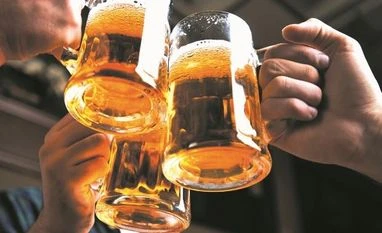
United Breweries, beer
Representative Image
Sharleen Dsouza Mumbai
4 min read Last Updated : Oct 08 2023 | 11:41 PM IST
The consumption of beer has remained stagnant in Maharashtra, while that of Indian-made foreign liquor (IMFL) has continued to grow over the past nine years.

The slowdown in beer consumption can be attributed to frequent changes in taxation, which have affected both pricing and the alcoholic beverage (alcobev) industry, according to industry experts.

Data shared by the industry reveals that the maximum retail price of fast-moving strong beer (650 ml) in the state has increased by 64 per cent from 2013-14 to 2021-22, while the price of fast-moving IMFL (180 ml) has only risen by 10-20 per cent during the same period.

A spokesperson for AB InBev India said, “Maharashtra boasts several urban centres such as Mumbai, Pune, Thane, Nagpur, and Nashik, where a low-alcohol beverage like beer remains a preferred choice. Unfortunately, excise taxes on beer have increased by more than 30 per cent in recent years, making beer significantly more expensive compared to hard spirits in Maharashtra. Encouraging the shift from high- to low-alcohol beverages is not only a step towards responsible consumption but also helps in unlocking the growth of the beer category.”

“A differentiated taxation structure also leads to affordability and, as a consequence, increased revenue for the state. We strongly urge policymakers in Maharashtra to consider a differentiated tax angle for beer,” the spokesperson added.

Notably, other states have reduced excise duties on beer and eased retail regulations.


Haryana, for example, has reduced excise duty on super mild beer and draught beer, as well as lowered the licence fee by 20 per cent for pubs exclusively serving beer and wine.

Additionally, it permits employees in large offices (those with more than 5,000 employees and a minimum covered area of 100,000 square feet on a single premises) to consume beer, wine, and other beverages with low-alcohol content.

Punjab and Uttarakhand have made beer more accessible, while Odisha and Rajasthan have maintained unchanged excise duties on beer for 2023-24.

Uttarakhand has also allowed Indian-made beer to be sold in department stores and malls, a privilege previously reserved for imported beer.

Punjab has even announced plans to open ‘beer-only’ retail shops.


In contrast, Odisha has raised excise duty on spirits by 10 per cent while keeping the duty for beer unchanged.

Goa has announced an increase in excise duty on low-end, high-selling hard spirits for this year.

Himachal Pradesh has raised excise duty on beer but has widened the excise duty gap between spirits and beer. Currently, excise duty on beer is at 13 per cent, while spirits are taxed at 18 per cent.

Despite these changes in other states, Maharashtra stands out for its higher taxes on beer, leading consumers to opt for hard liquor, which is typically above 40 per cent alcohol by volume and more affordable than beer, which typically has an alcohol content of 5-8 per cent by volume.

Rishi Chawla, vice-president of corporate affairs at Carlsberg India, explained, “Alcohol in beer is taxed at a much higher rate than alcohol in IMFL. For a comparable price point in Maharashtra, excise duty per millilitre of pure alcohol is higher by 25 per cent for strong beer and 84 per cent for mild beer. This pricing discrepancy drives consumers towards higher-content alcohol due to affordability constraints when choosing a low-alcohol beverage like beer. Young adults, who make up 57 per cent of Maharashtra’s population, are particularly price-sensitive.”

Chawla also noted that in 2012-13, beer contributed 39 per cent to total alcobev sales in Maharashtra, but this figure has dropped to 33 per cent in 2022-23. Over the same period, beer sales have registered a compound annual growth rate of zero per cent. He emphasised that excise duty rationalisation, aligning it with IMFL rates, would greatly support the beer industry in realising its full potential.

One subscription. Two world-class reads.

Already subscribed? Log in

Subscribe to read the full story →
*Subscribe to Business Standard digital and get complimentary access to The New York Times

Smart Quarterly

₹900

3 Months

₹300/Month

SAVE 25%

Smart Essential

₹2,700

1 Year

₹225/Month

SAVE 46%
*Complimentary New York Times access for the 2nd year will be given after 12 months

Super Saver

₹3,900

2 Years

₹162/Month

Subscribe

Renews automatically, cancel anytime

Here’s what’s included in our digital subscription plans

Exclusive premium stories online

  • Over 30 premium stories daily, handpicked by our editors

Complimentary Access to The New York Times

  • News, Games, Cooking, Audio, Wirecutter & The Athletic

Business Standard Epaper

  • Digital replica of our daily newspaper — with options to read, save, and share

Curated Newsletters

  • Insights on markets, finance, politics, tech, and more delivered to your inbox

Market Analysis & Investment Insights

  • In-depth market analysis & insights with access to The Smart Investor

Archives

  • Repository of articles and publications dating back to 1997

Ad-free Reading

  • Uninterrupted reading experience with no advertisements

Seamless Access Across All Devices

  • Access Business Standard across devices — mobile, tablet, or PC, via web or app

Topics :BeeralcoholGST on alcoholMaharashtra

Next Story


