NPCIL to revise existing tender for nuclear reactors under SHANTI regime

NPCIL is revising its Bharat Small Reactors tender and extending timelines after the SHANTI Act opened India's nuclear power sector to private participation
Nuclear Energy
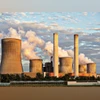
India has launched a Nuclear Energy Mission to ramp up nuclear power generation capacity to 100 gigawatt (GW) by 2047 | Representational image from Pexels
Sudheer Pal Singh New Delhi
2 min read Last Updated : Jan 15 2026 | 11:08 PM IST
State-owned Nuclear Power Corporation of India (NPCIL) is revising its Bharat Small Reactors (BSRs) tender to align with the newly enacted SHANTI Act, a landmark legislation that opens India’s nuclear sector to private participation.
 
The company had floated a request for proposal (RFP) in December 2024 inviting proposals from state-owned and private companies to set up 220 Megawatt (Mw) BSRs, outlining a business model for industry participation. It has now extended the timeline for submission of proposals to March 2026.
 
The original RFP was structured according to the provisions of the Atomic Energy Act 1962 and the Civil Liability for Nuclear Damage Act 2010. Parliament passed the Sustainable Harnessing and Advancement of Nuclear Energy for Transforming India (SHANTI) Act last month, opening up the nuclear energy sector for private participation.
 
“In light of the revised statutory regime, NPCIL proposes to rework the underlying business model to ensure full alignment with the provisions and intent of the SHANTI Bill,” the company said, inviting inputs from the industry to ensure the revised model addresses implementation requirements while safeguarding policy objectives.
 
NPCIL will hold a consultative workshop next week to discuss a new approach for implementing the BSR programme in the post-SHANTI Bill context. The original RFP was for setting up 220 Mw BSRs, based on Pressurised Heavy Water Reactor (PHWR) technology, in brownfield and greenfield sites offered by industries for their captive electricity consumption.
 
NPCIL issued the original tender after Budget 2024’s announcement that private companies will be allowed to participate in deploying BSRs as captive plants.
 
India’s Nuclear Energy Mission aims to increase the sector’s power generation capacity to 100 Gigawatt (Gw) by 2047. The roadmap requires NPCIL to set up 54 Gw capacity through projects based on indigenous PHWRs and Light Water Reactors with foreign cooperation.
 
Bhabha Atomic Research Centre is designing and developing SMRs, including 200 MW Bharat Small Modular Reactors and 55 MW Small Modular Reactors that can be used as captive plants for energy-intensive industries and in remote places.

One subscription. Two world-class reads.

Already subscribed? Log in

Subscribe to read the full story →
*Subscribe to Business Standard digital and get complimentary access to The New York Times

Smart Quarterly

₹900

3 Months

₹300/Month

SAVE 25%

Smart Essential

₹2,700

1 Year

₹225/Month

SAVE 46%
*Complimentary New York Times access for the 2nd year will be given after 12 months

Super Saver

₹3,900

2 Years

₹162/Month

Subscribe

Renews automatically, cancel anytime

Here’s what’s included in our digital subscription plans

Exclusive premium stories online

  • Over 30 premium stories daily, handpicked by our editors

Complimentary Access to The New York Times

  • News, Games, Cooking, Audio, Wirecutter & The Athletic

Business Standard Epaper

  • Digital replica of our daily newspaper — with options to read, save, and share

Curated Newsletters

  • Insights on markets, finance, politics, tech, and more delivered to your inbox

Market Analysis & Investment Insights

  • In-depth market analysis & insights with access to The Smart Investor

Archives

  • Repository of articles and publications dating back to 1997

Ad-free Reading

  • Uninterrupted reading experience with no advertisements

Seamless Access Across All Devices

  • Access Business Standard across devices — mobile, tablet, or PC, via web or app

Topics :NPCILNuclear energyNuclear reactors

Next Story



