Power to the people: Need for India to lay more transmission lines

High-voltage direct current transmission systems are central to the country's energy infrastructure
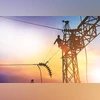
power, electricity
The industry complains of a dearth of current carrying systems, delaying renewable projects, but some transmission lines are operating below capacity.
S Dinakar New Delhi
9 min read Last Updated : Apr 30 2025 | 10:46 PM IST
“If you care about climate change, you should care about transmission,” said Bill Gates in January 2023 in Gates Notes, his personal website. 
It was finally left to the US billionaire and philanthropist to shine a light on a much-neglected aspect of the electricity system — spools of copper cables running over your house and across towns and cities, which transport current generated from the sun or from burning coal to your residences to operate your televisions and charge your phones. Gates’s first job in high school was writing code to computerise the power grid, which was responsible for some of America’s biggest blackouts in recent years. 
A similar blackout happened earlier this week in Europe, creating chaos in Spain, Portugal and parts of France by shutting down metro lines, refineries and traffic lights. Spain’s power grid lost 15 gigawatts of electricity, a bulk of the country’s demand, in five seconds. Investigations are ongoing but European grid operators attributed the snap to problems in the Spanish-French grid interconnection system, leading to strong fluctuations in the grid. 
Grids, particularly high-voltage direct current transmission systems (HVDC), are central to India’s modern energy infrastructure and the smooth functioning of its economy. But these powerful, gangly networks were long neglected by governments, which typically focused on inauguration-friendly multibillion-dollar coal-fired generators and gleaming arrays of solar panels. 
India missed transmission targets by a mile in 2024-25 (FY25) even as it tripled solar installations to a record 25 gigawatts from a year earlier, according to government data. If capacity additions rebound in FY26, it will boost renewable installations — the availability of adequate transmission infrastructure for evacuation of power is one of the critical requirements for renewable power projects, said Anand Kulkarni, director, Crisil Ratings, a US S&P company. 
The importance of a robust grid for India can no longer be ignored. Demand for electricity is expected to grow at a faster-than-expected 5-6 per cent annually, with peak power demand slated to rise to a record 270 Gw this year from 250 Gw last fiscal.  Per capita electricity consumption in India surged to 1,395 kWh in 2023-24, a 46 per cent increase in the past decade, government data shows. 
But the urgency of demand wasn’t reflected in the pace at which the government laid current-carrying cables. The country added 8,830 circuit kilometre (ckm) transmission lines and 86,433 megavolt-amperes substation capacity in FY25, translating to 58 per cent and 77 per cent of the target, respectively, Crisil data shows. No HVDC lines were laid. State-sponsored projects were a drag on transmission projects, meeting only half of their targets at 7,347 ckm; the private sector was more successful at 94 per cent or 1,483 ckm, data from Central Electricity Authority shows. Low past awarding has impacted the completions in FY25 to some extent, Kulkarni said. 
“Transmission delays are one of the most significant challenges facing India’s renewable energy sector today, potentially affecting 30-40 per cent of planned solar and wind capacity annually,’’ said Vijay Karia, chairman, Ravin Group, a clean energy solution provider. 
Despite falling short of targets, India raised the transmission bar by 25 per cent in FY26 at 19,000 ckm after boosting project awards. The government said in January that 51GW of interstate transmission projects costing ₹60,676 crore have been approved. Crisil Ratings foresees capital expenditure of around Rs 1 trillion over FY26 and FY27 in interstate transmission sector, twice that of Rs 50,000 crore cumulatively seen between FY24 and FY25. 
“People think that with renewables, transmission is less critical, but with renewables, transmission is more critical,’’ said Pratik Agarwal, chairman of Resonia, a transmission infrastructure business formerly known as Sterlite Grid 32. 
“Because when you had a coal-fired power plant, you had a lot of certainty that as long as the coal was available, you’d deliver power for X hours in the year, but with solar or wind, you have no certainty,” he said. “You’re dependent on the weather, so you need a very well-connected grid.’’ 
Renewables also require more coordination with grid construction. Solar and wind projects could come up in 18-24 months but transmission projects require more time, say, somewhere between three and five years, said Disha Agarwal, senior programme lead, Council on Energy, Environment and Water (CEEW).
 
Stiff targets 
India has set a stiff target of 648,000 km of transmission networks of 220 Kv and above by 2032 from around 490,000 ckm in 2024, which mandates around 23,000 ckm of record additions every year for the next seven years. The total cost of the National Electricity Plan 2023-32 is ₹9.15 trillion. Transformation capacity is expected to increase to 2,342 giga volt ampere (GVA) from 1,290 GVA. That compares to 17,700 ckm lines and 73 GVA transformation capacity added annually in the 2017-22 period. 
Laying of transmission cables and transformers has lagged schedules due to a clutch of reasons, including right of way, delay in receiving forest clearances and other regulatory hurdles, industry officials said. The root causes for transmission delays are multifaceted — delays in land acquisition, outdated grid infrastructure and policy hurdles to manufacture specialised cable systems like HVDC. 
“This particular financial year has been poor,” CEEW’s Agarwal said.  There are delays in getting equipment for transmission networks because the manufacturers’ ability to supply them at the pace at which targets are set is limited, she said. These are not standardised equipment that have to be designed bespoke. HVDC systems are imported. 
So are special steels that go into the equipment. For instance, many of these transformers require special grades of steel, and much of that is imported, CEEW’s Agarwal said.  
Other challenges involve the great Indian bustard, an endangered bird inhabiting the Thar desert and other arid areas, which derailed transmission projects in Rajasthan and Gujarat. 
Land acquisition may accelerate after the Ministry of Power revised the right of way guidelines last June, linking compensation to the market value of land and more than doubling payouts for the tower base area. This year’s Union Budget highlighted plans to localise manufacture of critical transmission equipment. 
 
High-voltage carriers 
HVDC networks, the nerve centre of modern grids, or an electrical superhighway that complements renewable energy projects, are central to India building a robust transmission network and achieving a 500-600GW non-fossil fuel capacity target by 2030. HVDC minimises losses during long-distance transmission, helps stabilise a network against disturbances due to rapid changes in power, prevents blackouts, and allows the exchange of power between previously incompatible networks. 
“Due to the fluctuating and unstable nature of renewable energy, the need for specialised high-voltage wind/solar cables has increased, which can help in reducing energy losses during transmission and distribution,’’ Karia said. 
India has offered billions of dollars in incentives to solar and battery manufacturing, which helped add over 25 gigawatts of solar module manufacturing capacity in 2024, and nearly 12GW of solar cell capacity, according to consultant Mercom India. But there’s not a single Indian manufacturer making HVDC, and an announcement in this year’s Budget promising incentives for making advanced transmission infrastructure lies dormant, industry officials said. 
That leaves the country dependent on overseas suppliers for HVDC — a patented technology with Siemens, Hitachi, and some Chinese companies — because of proposed additions of nine HVDC lines across the country (of 33.25 GW), doubling existing capacity. The challenge in HVDC, first laid in the 1880s, are the converter stations, which convert alternating current (AC used in home appliances, lighting) to direct current (DC), and back to AC, industry officials said. Resonia’s Agarwal said that the government has to offer a lot of incentives to kickstart domestic HVDC manufacturing. 
Explaining the rationale behind laying high-voltage networks, he said that renewable projects are springing up in the far corners of the country like Jaisalmer or Kutch, while the end use is restricted to metros and towns. The transmission chain involves a step-down process — starting with a high voltage 765 kV AC or 800 kV HVDC line from the generation point to somewhere in the middle of India. And from there, the electrons travel via a 400 or 220 kV line to the distribution company in your state. The power is then sent within the distribution network via a 66 kV or 33 kV line, which eventually ends up in a 440/220 V supply in households. 
The industry complains of a dearth of current carrying systems, delaying renewable projects, but some transmission lines are operating below capacity. 
“Currently, a large part of the transmission system is being underutilised,’’ said Vineet Mittal, chairman of Avaada group, a leading renewable projects developer. “Say, for example, I have a 1,250-megawatt solar project in Rajasthan, but I'm only using the line from 6 am to 6 pm, almost 50 per cent of my capacity is underutilised. It is a waste of resources.” 
Mittal contrasted China’s rapid rate of building transmission networks including ultra HVDCs, the most powerful current carriers, with India’s languid pace, saying that Beijing faces little judicial interference to conserve the habitat. More importantly, China may have 50 vendors for HVDC systems, while the vendor here seeks four years for deliveries. And if it’s in the great Indian bustard area, then I need to get the Supreme Court’s nod, he added. 
Another critical issue is last-mile connectivity. Even if HVDC lines are laid, state utilities, operating at losses, are not strengthening distribution networks to absorb the output, Karia said. 
India’s electrons and grids have much catching up to do to dispatch clean power reliably and efficiently.

One subscription. Two world-class reads.

Already subscribed? Log in

Subscribe to read the full story →
*Subscribe to Business Standard digital and get complimentary access to The New York Times

Smart Quarterly

₹900

3 Months

₹300/Month

SAVE 25%

Smart Essential

₹2,700

1 Year

₹225/Month

SAVE 46%
*Complimentary New York Times access for the 2nd year will be given after 12 months

Super Saver

₹3,900

2 Years

₹162/Month

Subscribe

Renews automatically, cancel anytime

Here’s what’s included in our digital subscription plans

Exclusive premium stories online

  • Over 30 premium stories daily, handpicked by our editors

Complimentary Access to The New York Times

  • News, Games, Cooking, Audio, Wirecutter & The Athletic

Business Standard Epaper

  • Digital replica of our daily newspaper — with options to read, save, and share

Curated Newsletters

  • Insights on markets, finance, politics, tech, and more delivered to your inbox

Market Analysis & Investment Insights

  • In-depth market analysis & insights with access to The Smart Investor

Archives

  • Repository of articles and publications dating back to 1997

Ad-free Reading

  • Uninterrupted reading experience with no advertisements

Seamless Access Across All Devices

  • Access Business Standard across devices — mobile, tablet, or PC, via web or app

Topics :Climate ChangePower Sectorelectricity sectorenergy consumption

Next Story


