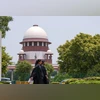
The Supreme Court on Friday allowed the closure of criminal cases against former directors of Sterling Biotech Nitin and Chetan Sandesara on the condition that they deposit ₹5,100 crore by December 17.
This amount is almost one-third of their total outstanding dues.
A Bench of Justice J.K. Maheshwari and Justice Vijay Bishnoi directed that the sum be distributed among the consortium of lender banks in proportion to the amount due towards them.
The court said the payment would constitute a full and final settlement of the loan dispute, bringing an end to all related criminal and investigative proceedings.
“In consequence of the above, the litigation with respect to the loan amount of the petitioners for which the FIR was registered and the one-time settlements (OTS) was sanctioned and approved, shall be put to an end by way of full and final settlement as per consensus, and this litigation shall be put to quietus,” the court said.
The court noted that the decision was taken in light of the “peculiar facts” of the matter and should not be treated as a precedent.
“These directions as issued are in peculiar facts of this case, therefore, they shall not be treated as precedent,” the court added.
It recorded that the Sandesara brothers had agreed to the proposal put forth by Solicitor General Tushar Mehta on behalf of the government.
They expressed their intent to settle all pending proceedings initiated by agencies, including the Central Bureau of Investigation (CBI), Enforcement Directorate (ED), Serious Fraud Investigation Office (SFIO), and Income Tax authorities.
The Bench observed that since the petitioners were willing to repay a significant portion of the dues, continuing criminal proceedings would serve no useful purpose. It said the court’s primary objective was to ensure recovery of public funds siphoned off through corporate misfeasance.
“...it is apparent that since inception, this court was of the view that if the petitioners are ready to deposit the amount as settled in OTS and public money comes back to lender banks, the continuation of the criminal proceedings would not serve any useful purpose,” the court said.
The case originated from a CBI probe into allegations that Sterling Biotech and its promoters had defrauded a consortium of public sector banks led by Andhra Bank. The loans were declared non-performing after defaults, with investigators alleging that funds were routed through shell companies abroad.
Following the probe, enforcement and corporate fraud agencies launched separate proceedings, and the Sandesara brothers were later declared fugitive economic offenders after leaving India and acquiring Albanian citizenship in 2017.
They are accused of defrauding Indian banks of over $1.7 billion. Albania granted them citizenship after they pledged to invest over $33 million in local construction projects.
While OTS is not new in India’s banking framework, its use in high-profile fraud cases is rare.
“Banks have earlier accepted reduced recoveries when chasing the full amount was unrealistic or assets were overseas,” said Rahul Hingmire, managing partner of Vis Legis Law Practice. He cited the Sahara–Securities and Exchange Board of India (Sebi) and Vijay Mallya matters as examples.
He added, “The OTS concept is familiar, but applying it to individuals declared fugitive economic offenders remains rare in practice.”
According to Shiv Sapra, partner at Kochhar & Co., such settlements are legally possible but highly restricted.
“If the complainant is willing, this can happen. The complainant must express satisfaction with the settlement being proposed,” he said.
However, he added that “the existence of elements such as public money, CBI or ED proceedings, or corruption are major factors that merit consideration before permitting such settlement.”
Sapra pointed to Gian Singh v. State of Punjab as a precedent where the Supreme Court allowed quashing of cases with a civil flavour, while excluding heinous crimes from such relief.
B. Shravanth Shanker, Advocate-on-Record at the Supreme Court, noted that the current case represents a rare use of Article 142 powers.
“While banks can accept one-time settlements under RBI and IBC frameworks, those deal with civil recovery — not criminal liability. Here, the Court is considering quashing criminal cases subject to repayment, which sets a significant precedent,” he said.
Shanker cautioned, however, that “allowing settlements in major financial offences may invite criticism for setting a poor precedent, even if legally permissible. The Court’s case-specific approach ensures constitutional propriety, but public perception will remain divided.”


 "Supreme Court agrees to clear Sandesaras of bank fraud after part-payment")

