Telecom operators seek ban on illegal WiFi devices running on 6 GHz
The industry body argued that the utilization of such WiFi devices operating in the 6 GHz band will render customers responsible for these unauthorized transmissions, placing liability on consumers
Subhayan Chakraborty New Delhi In a move that may widen the gulf between telecom operators and illegal WiFi routers that run on the lucrative 6 GHz spectrum band and are being sold on e-commerce sites, the telecom industry body Cellular Operators Association of India (COAI) has written to the Department of Telecommunications (DoT). It has sought an immediate ban on the sale of all routers operating on the band.
The 6 GHz band represents the largest block of unused spectrum and is being fought over by telcos and tech companies due to its significant potential for both 5G connectivity and WiFi expansion. The band allows precise positioning of a large amount of signals and has very low latency or wait time.
The DoT is yet to take a policy decision on the band's utilization. "Therefore, any sale of such Wi-Fi 6E products, which utilizes the 6 GHz spectrum band in an unlicensed manner, is illegal and such sale would only result in unauthorized transmissions in our country," COAI said.
The industry body also argued that the utilization of such WiFi devices operating in the 6 GHz band will render customers responsible for these unauthorized transmissions, placing the burden of liability on consumers.
It has asked the government to take strict measures to put a complete ban on the sale of WiFi products operating in the 6 GHz band, whether offline or online, through a notification to the sellers. The industry body has also submitted a list of the products available on e-commerce platforms.
According to the Indian Telecommunications Act, 2023, the Centre is the owner of the spectrum and the use of spectrum by any person requires assignment from the Centre.
Representing private sector telcos such as Reliance Jio, Bharti Airtel, and Vodafone Idea among its members, COAI has argued that at least 1,200 MHz of spectrum needs to be allocated for mobile communications in India. Currently, only 720 MHz is available in the mid-band in India, it said.

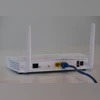 "Telecom operators seek ban on illegal WiFi devices running on 6 GHz")

