The America-India (AI) relationship, which until 2000 lacked trust and was sometimes even hostile, has now come full circle. A process of closer relations started under President Bill Clinton and has progressed since then under Presidents George W Bush, Barack Obama, and Donald Trump. But the recent welcome accorded to Prime Minister Narendra Modi by President Joe Biden, with a state dinner and a speech to the US Congress, has taken the AI relationship to a much higher level. While the China threat is the immediate boost for this relationship, it has many legs, from trade, technology, defence production, space, and climate-related initiatives to the growing role of the Indian diaspora, now the US’ richest ethnic group.
In today’s piece my focus is on trade. The US is now India’s largest trading partner, with bilateral trade reaching $192 billion in 20221, much larger than the China-India trade of $136 billion. Moreover, while India runs a trade surplus with the US of over $30 billion in merchandise exports, it runs a huge trade deficit of over $80 billion with China. Despite the Galwan clash, after which India banned several Chinese companies, over 10 per cent of India’s imports still come from China alone. In addition to bolstering defence ties, increasing trade, technology and investment with the US are to India’s advantage. The US, too, gains hugely with India providing the only large counterweight to China in the Indo-Pacific region and its rapidly growing economy projected to be the third largest by 2030.
But one fact stands out; since 1990, India’s exports have grown faster than global exports, and since 2000, twice as fast. As a result, India’s share of global exports, which was 0.5 per cent in 1990, has risen to 2.5 per cent in 2022. But it remains small compared to China’s (12 per cent), Germany (6.6 per cent) or even the UK (3.2 per cent). If India can continue to increase its global share of exports to around 4 per cent by 2030, it could hope to reach its target of $2 trillion, despite slower growth in global trade.
India will not benefit from increased trade with China with whom our deficits will only keep rising. India exports only a little over $20 billion to China versus over $100 billion to the US. India’s exports to the US doubled in the last seven years and could reach $300 billion by 2030. The EU market is potentially huge for India, with goods and services exports at around $75 billion in FY 2022-2023. But with the EU, India must deal with the threat of a climate border adjustment mechanism (CBAM) looming and heavy phyto-sanitary regulations. Trade agreements with the UK, coming on top of agreements reached with Australia and the UAE, will help. Latin America also offers a huge market — its imports exceed $1 trillion, with Mercosur countries importing close to $0.5 trillion. But even with all these efforts, the key to achieving India’s ambitious export targets will be growing US-India trade, which, as the Union Commerce Minister Piyush Goyal said, should reach $500-$600 billion by 2030.

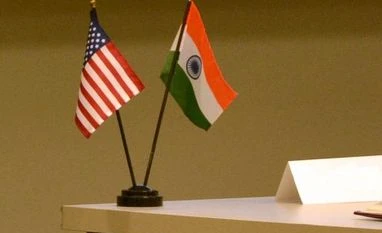 "AI: A friendship whose time has come")












 Connect with us on WhatsApp