Ironically, had the Aam Adami Party (AAP) chosen to receive the alleged 'bribes' in the Delhi excise policy in electoral bonds, its leader and Delhi Chief Minister, Arvind Kejriwal, would not have been in jail today.
The party was eligible to receive electoral bonds in November 2021, having received more than one per cent of the vote in the previous general election. Why the alleged bribes were preferred in cash is best known to the parties involved.
Despite the Centre targeting him for a long time, it was never going to be easy to arrest Kejriwal. As chief minister, he kept no portfolio, never signed any files, and attended no specific policy meetings. The change in the excise policy case gave the BJP government the opening it needed because there seems to be some evidence linking the alleged bribe givers to him. However, a money trail leading to him is yet to be established.
Kejriwal dodged repeated summonses from the ED, perhaps calculating that there were fewer chances of arrest closer to the elections. Normally, governments slow down on executive actions once the Model Code of Conduct kicks in.
Then why did the Bharatiya Janata Party (BJP) government at the Centre decide to arrest Kejriwal? An attack on one's political rivals can boomerang four weeks before the elections.
He had been a thorn in the BJP's side for long. His defeat of the BJP in Delhi state elections, in particular, hurt Prime Minister Narendra Modi's image of invincibility. But had the AAP not formed an alliance with the Congress and joined the INDIA bloc, he might not have faced arrest.
Without an electoral understanding, the AAP and Congress would have cut each other's votes, paving the way for the BJP to sweep the seven Lok Sabha seats from Delhi. The anti-BJP vote, including the minority vote, will consolidate behind the AAP-Congress alliance.
Like former Jharkhand Chief Minister Hemant Soren and Bharat Rashtra Samithi chief K Chandrasekhar Rao (KCR), Kejriwal is being punished for his choice of alliance. Had Hemant Soren broken the alliance with the Congress in Jharkhand and BRS agreed to be the BJP's cat's paw by fielding candidates in the districts bordering Maharashtra, Soren and K Kavitha (KCR's daughter) may have been spared. The government of the day can choose whether and when to prosecute allegations of corruption.
After Kejriwal's arrest, the BJP will have to thwart any sympathy wave in Delhi in favour of AAP. Over the next week or so, the media might, therefore, be flooded with enough unverified and source-based information about the alleged 'bribes' in the new excise policy case to evaporate public sympathy for Kejriwal. Details of a hawala operator in Goa and other dramatis personae involved in channelling the alleged bribes have already begun to appear in select newspapers.
Unless there are more protests against his arrest, officials may be emboldened to move against him on new fronts. The ED also wants to examine Kejriwal in a money laundering case involving Delhi Jal Board contracts. Apparently, there are other cases in the pipeline, including one alleging that Kejriwal had set up a special unit to snoop on ED officials and members of their families. With the polling in Delhi in the sixth phase on May 25 – they have two months to chip away at his reputation as a squeaky-clean politician.
Kejriwal's arrest and trial will have a profound impact on his governments in Delhi and Punjab, as well as on the party itself.
By revealing Kejriwal as a villainous politician disguised as a valiant crusader, the BJP hopes to dampen any sympathy that his arrest may have generated. The BJP is targeting the floating voters, who vote for AAP in state assembly polls but for the BJP in the national elections.
Kejriwal has not resigned, and his party claims that he will run the Delhi government from jail. The logistics remain obscure. Under the Rules of Business, a government employee detained for more than 48 hours is automatically suspended. Legislators under trial can remain members of the legislature unless convicted and imprisoned for more than two years. Still, it is unclear how a head of government can function behind bars. There is no provision in the prison rules to allow cabinet meetings within jail premises. President's Rule may ensue if the Delhi government is dismissed for being dysfunctional.
However, the process of choosing a new chief minister may unravel the party. Had he been arrested three or four months ago, speculation was that Atishi Singh would take his place. This is no longer certain with two new contenders appearing – a Cabinet colleague suddenly vocal in the media and Kejriwal's wife, Sunita. The unusually articulate colleague was advised to leave media interaction to health minister Saurabh Bharadwaj and education minister Atishi Singh.
Sunita Kejriwal's political future has also become a point of speculation after her unexpected appearance on TV screens, flanked by two national flags, to read out her husband's letter from custody. Is Kejriwal projecting her as a political alternative by choosing her rather than a senior AAP minister?
As chief minister, Sunita Kejriwal can help consolidate voter sympathy and prevent any interim post-holder from developing a vested interest in the job. The risk is that AAP will appear no different from the family-run parties of the Bihar-Uttar Pradesh belt.
The immediate fallout in Punjab could put greater pressure on Chief Minister Bhagwant Mann to reach a seat-sharing arrangement with Congress. A BJP-Akali Dal alliance is currently being negotiated. Given the anger of the Sikh farmers, an AAP-Congress alliance could seriously reduce the prospects of a BJP-Akali combine.
The ratcheting of political drama across India to win the imminent elections is no accident. However, as the dispensation in Delhi hobbles its challengers through state agencies, it will be increasingly difficult to figure out whether India's neighbours like Bangladesh and Pakistan, having gone through seriously flawed elections, were taking a leaf out of India's book or whether the learning is the other way around.

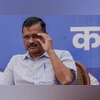 "An uncommon man behind bars: Fallout of Arvind Kejriwal's arrest")












 Connect with us on WhatsApp