CETA joins India's expanding trade playbook: A new template for future FTAs

From protectionism to liberalisation - it sets a new template for India's future FTAs
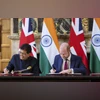
Piyush Goyal, Piyush, Jonathan Reynold
Union Commerce Minister Piyush Goyal and his British counterpart Jonathan Reynold during the signing of the Comprehensive Economic and Trade Agreement (CETA), in the UK.(Photo: PTI)
Ajay Srivastava Mumbai
5 min read Last Updated : Jul 25 2025 | 10:45 PM IST

Don't want to miss the best from Business Standard?

A new acronym has entered India’s trade vocabulary — Ceta, short for Comprehensive Economic and Trade Agreement — signed with the United Kingdom (UK) on July 24 in London. 
The agreement covers 26 areas, including tariffs cuts, services, government procurement, digital trade, and intellectual property. It is expected to significantly boost bilateral trade, which stood at $54.9 billion in FY25, with India running an $11.7 billion surplus. With new openings in goods, services, and investment, two-way trade could surpass $100 billion within the next decade. 
But more than being just a trade booster, the agreement signals a shift in India’s FTA (free trade agreement) strategy — softening long-held protections in areas like public procurement, auto tariffs, and pharmaceutical licensing. 
Here’s a look at the key concessions exchanged. 
Tariff concessions: For India, $6.5 billion, or 45 per cent, of exports like textiles, footwear, carpets, automobiles, seafood, and fresh fruit will now enter the UK duty-free, down from earlier tariffs of 4-16 per cent. Another $8 billion in exports — mainly petroleum, pharmaceuticals, diamonds, and aircraft parts — already enjoyed zero tariffs under UK rules even before the deal. The UK has committed itself to eventually eliminating duties on all Indian goods, with only a few farm items like rice and sugar excluded. The UK also secures significant access. Today, 94 per cent of its $8.6 billion exports to India face medium to high duties. India will now remove tariffs on 90 per cent of these goods, with 64 per cent, including salmon, lamb, aircraft parts, machinery, and electronics, getting immediate duty-free entry. Another 26 per cent, including chocolates, soft drinks, cosmetics, and auto parts, will see phased reductions over 10 years. 
For the first time in any FTA, India will cut duties on a set number of high-end UK cars from 100 per cent to 10 per cent over 15 years. Alcohol tariffs will also fall sharply — from 150 per cent to either 75 per cent or 40 per cent — for qualifying UK-origin spirits priced at $6 or more per bottle. India has kept out a list of sensitive products like apples, walnuts, whey, certain seeds, gold bars, and smartphones. 
Government procurement: For the first time, around 40,000 high-value contracts from central ministries and departments — covering transport, green energy, and infrastructure — will be open to UK suppliers. These firms will be able to bid via India’s Central Public Procurement Portal and GeM (government e-marketplace) platform, and will receive national treatment for all covered procurements. Notably, UK-origin goods with just 20 per cent domestic content will qualify as “Class II” local suppliers under India’s Public Procurement Order, a category earlier reserved for Indian firms with 20-50 per cent local content. While India has retained exclusions for sensitive areas like health, agriculture, MSMEs, and small-value contracts, the overall concession is the most expansive India has ever granted in any trade deal. 
Intellectual property concession: India has accepted the language in the “Intellectual Property” chapter, which could weaken its ability to issue compulsory licences during public health or climate emergencies. For the first time in any FTA, India has agreed to explicitly uphold the principle of “adequate remuneration” to patent holders as a binding bilateral obligation. This risks narrowing India’s policy space under domestic law. The deal also promotes voluntary licensing as the preferred approach, tilting the balance toward patent holders and away from public health needs. 
Services: India has opened up key sectors like telecom (100 per cent foreign direct investment), financial services (FDI in insurance capped at 74 per cent), auditing, construction, and environmental services to UK firms under the new trade deal. India has also agreed to recognise some UK professional qualifications in fields like accounting, though legal practice remains off limits. 
In contrast, the UK’s offer on services is far more limited. While it allows Indian investment in sectors like information technology and consultancy, it has made no binding commitments to ease visa access for Indian professionals — a key Indian demand. Just 1,800 visas a year are offered for niche roles like yoga teachers and classical musicians. The UK hasn’t restored post-study work visas and retains its strict points-based immigration rules. One modest gain is the Double Contribution Convention, which spares over 75,000 Indian workers on short assignments from paying UK social security tax if they’ve paid in India. 
Change in approach: The FTA marks a major shift in how India approaches trade deals. In the past, India shielded sensitive areas like government procurement, autos, and pharmaceuticals. But under this agreement, it has started opening up these sectors. Similar steps were taken in recent deals with the United Arab Emirates and European Free Trade Association, but the UK agreement goes even further — and upcoming FTAs with the European Union and US could push this trend deeper. India’s success in sectors like autos and pharma came from years of targeted policy support and government-procurement policies. By relaxing these protections, India risks weakening the very tools that built its industrial strength and ensured economic independence. 
The author is the founder of GTRI

One subscription. Two world-class reads.

Already subscribed? Log in

Subscribe to read the full story →
*Subscribe to Business Standard digital and get complimentary access to The New York Times

Smart Quarterly

₹900

3 Months

₹300/Month

SAVE 25%

Smart Essential

₹2,700

1 Year

₹225/Month

SAVE 46%
*Complimentary New York Times access for the 2nd year will be given after 12 months

Super Saver

₹3,900

2 Years

₹162/Month

Subscribe

Renews automatically, cancel anytime

Here’s what’s included in our digital subscription plans

Exclusive premium stories online

  • Over 30 premium stories daily, handpicked by our editors

Complimentary Access to The New York Times

  • News, Games, Cooking, Audio, Wirecutter & The Athletic

Business Standard Epaper

  • Digital replica of our daily newspaper — with options to read, save, and share

Curated Newsletters

  • Insights on markets, finance, politics, tech, and more delivered to your inbox

Market Analysis & Investment Insights

  • In-depth market analysis & insights with access to The Smart Investor

Archives

  • Repository of articles and publications dating back to 1997

Ad-free Reading

  • Uninterrupted reading experience with no advertisements

Seamless Access Across All Devices

  • Access Business Standard across devices — mobile, tablet, or PC, via web or app

Topics :CETAIndia-UK Free Tradetariffsfree trade agreementUK marketsTrade dealBS Opinion

Next Story



