Expanding storage for green energy key to 24-hour electricity in India

There are several energy storage solutions, but more reliable and significant at a grid level are battery storage and Pumped Hydropower Energy Storage
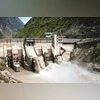
Hydropower project, dam
Recently, a more controlled solution has emerged in the form of closed-loop, or Off-River Pumped Hydropower Storage (ORPHES), also referred to as “closed-loop” CLPHES | Representational Image
Jyoti ParikhKirit S Parikh
5 min read Last Updated : Apr 01 2025 | 10:37 PM IST
The challenges of transitioning from fossil fuels to renewables (RE), such as solar, wind, and hydropower, are increasing as the share of RE in electricity grows. India’s total RE capacity has already reached nearly 43 per cent and is set to rise to 50 per cent by 2030, with the ultimate goal of achieving 100 per cent non-fossil capacity.
 
As RE sources are not available consistently round the clock, an uninterrupted 24-hour power supply will increasingly depend on readily available storage. There are several energy storage solutions, but more reliable and significant at a grid level are battery storage and Pumped Hydropower Energy Storage (PHES). The battery storage can provide grid support for only a few hours. They have the challenges of dependence on rare minerals like lithium that require prospecting, mining, extraction, recycling, and disposal.
 
Moreover, the batteries, whether imported or not, have a short lifespan and need to be replaced every few years. For many decades, a reliable and trusted storage solution has been river-based PHES. But its further expansion carries risks of land acquisition, disruption of river flows, and potential impacts on agriculture and farmers downstream, which could lead to social protests, and —  most of all — uncertainties due to droughts and floods, which are expected to increase as a result of climate change.
 
The importance of storage systems in the RE ecosystem is so high that multilateral banks and philanthropic foundations have set up global storage partnerships. National governments are helping to encourage storage solutions by seeking lithium and other rare minerals within their own countries or exploring partnerships abroad.
 
Recently, a more controlled solution has emerged in the form of closed-loop, or Off-River Pumped Hydropower Storage (ORPHES), also referred to as “closed-loop” CLPHES. It needs two reservoirs at sufficiently different heights, with the upper one needing to have enough water to begin with. The falling water can drive turbines, which can then be pumped back up using other energy sources during their idle time. Thus, the same water circulates, generating power, and only makeup water is needed to cover evaporation losses. This is a controlled system that does not depend on seasons or the uncertainties of rainfall, making it reliable throughout the year. 
 
It is also safer, easier and cheaper to build without worrying about droughts and floods, as the same stored water recirculates. The huge environmental damage caused by conventional hydropower is avoided. Moreover, it only needs domestic resources, local labour (job creation), and does not require foreign minerals. It involves very little displacement or resettlement, making it more affordable and expected to cost half as much as a river-based hydro plant. It can operate with control and safety. Satellite data analysis done by the Australian National University (ANU) scientists has shown that suitable sites for this technology are numerous all over the world. One of the reservoirs can be near the ocean or river (not necessarily on them). The second one can be in the defunct mines, lakes, or plains, as long as the two reservoirs are at sufficiently different heights.
 
Globally, the potential for ORPHES, as measured by satellite data is huge, but each situation has to be verified on the ground. The most active country with an ambition to reach a high level by 2030 is China, with plans for 71 Gw, with 14 Gw (14,000Mw) already in place. The United States and Japan currently have 27 Gw and 23 Gw, respectively. In India, the pioneering project of 900 Mw was set up in Purulia, West Bengal, as early as 2008, and is owned by the West Bengal State Electricity Distribution Company. ORPHES has recently picked up momentum. Currently, the enthusiasm is so high that even the private sector, which is usually risk-averse, has shown interest by submitting as many as 75 proposals amounting to 92 Gw, whose terms of reference are approved. Among these, 44 schemes amounting to 60 Gw have completed surveys and investigations. If they reach completion, India can be the second-largest country in this technology.
 
Realising the critical importance of storage, the central and state governments have now taken steps to increase storage capacity as much as possible. Currently, it is being suggested that RE projects need to have up to 20 per cent of storage alongside the new RE projects. Recently, the Ministry of Power has been encouraging the private and public sectors by waiving the need for central or state government approval to propose a project.
 
If RE generation is one step taken by one foot, then storage technologies are the other foot that must move to ensure a 24-hour electricity supply. So far, battery storage has received the most incentives. With production-linked incentive  (PLI), the government is helping to explore opportunities for sourcing raw materials from abroad. We also gave more than 25 years to photovoltaic (PV) solar to reach the scale it has. Off-river PHES needs to be gradually accepted and expanded. It can take off with similar support as given to the battery sector. We will have to give it some time and incentives before it matures, say, in 10 years. It is not a modular technology as batteries are, but then it provides much larger scale storage with domestic materials and skills.
 
An assured and interruption-free power supply is an essential ingredient for India’s economic growth and sustainable development, which will require the expansion of renewable generation together with storage.
 
The authors are, respectively,  executive director and  chairman at Integrated Research and Action for Development
 

One subscription. Two world-class reads.

Already subscribed? Log in

Subscribe to read the full story →
*Subscribe to Business Standard digital and get complimentary access to The New York Times

Smart Quarterly

₹900

3 Months

₹300/Month

SAVE 25%

Smart Essential

₹2,700

1 Year

₹225/Month

SAVE 46%
*Complimentary New York Times access for the 2nd year will be given after 12 months

Super Saver

₹3,900

2 Years

₹162/Month

Subscribe

Renews automatically, cancel anytime

Here’s what’s included in our digital subscription plans

Exclusive premium stories online

  • Over 30 premium stories daily, handpicked by our editors

Complimentary Access to The New York Times

  • News, Games, Cooking, Audio, Wirecutter & The Athletic

Business Standard Epaper

  • Digital replica of our daily newspaper — with options to read, save, and share

Curated Newsletters

  • Insights on markets, finance, politics, tech, and more delivered to your inbox

Market Analysis & Investment Insights

  • In-depth market analysis & insights with access to The Smart Investor

Archives

  • Repository of articles and publications dating back to 1997

Ad-free Reading

  • Uninterrupted reading experience with no advertisements

Seamless Access Across All Devices

  • Access Business Standard across devices — mobile, tablet, or PC, via web or app

Topics :BS OpinionGreen energyelectricityhydropower

Next Story


