Underlying this common need for a terrestrial fallback to satellites in the US and India is an emerging technology with footprints in both countries that is poised to play a crucial role. The National Association of Broadcasters in the US, in cooperation with government agencies, is evaluating the effectiveness of the latest version of the Advanced Television Systems Committee’s standard for terrestrial broadcasting (ATSC 3.0) to develop a broadcast-based positioning system (BPS) as an alternative to GPS.
At a conclave held on January 16 in New Delhi, by Indian Institute of Technology Kanpur and others, four secretary-level bureaucrats from the key ministries of information and broadcasting, telecom, electronics as well as science and technology made a strong case for D2M broadcasting to reach citizens directly on their mobile phones and other smart devices in the case of emergencies, disasters, and other situations critical to national interest. BPS uses a resilient portion of the ATSC 3.0 data frame that is received in deeper indoor locations and provides precision timing to servers and devices in energy, communications, fintech (think UPI), defence and other critical sectors, and BPS becomes the primary source.

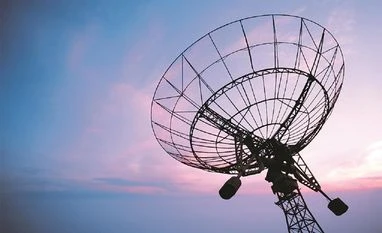 "Geopolitical convergence on terrestrial broadcasting")










 Connect with us on WhatsApp