India's waterways rediscovered: Charting a new course for Viksit Bharat

India has over 14,500 km of navigable waterways, and 111 are declared national waterways, as against mere five until 2014
Navy
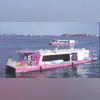
Urban water metros in 18 cities, modelled on kochi’s water metro (pictured), reflect the government’s vision of people-centric, planet-positive development. Photo: file/@cmokerala
Sarbananda Sonowal
5 min read Last Updated : Oct 16 2025 | 10:58 PM IST
Once, India’s rivers were not just sacred but sensible modes of transportation — when goods floated from Patna or Dibrugarh to Kolkata long before trucks ruled the tarmac roads. The rivers of India were the first highways, their currents moving grain, salt, and stories. In time, as steel rails and asphalt roads replaced them, the rivers turned into mere promises. 
Today, thanks to the Inland Waterways Authority of India (IWAI), India’s rivers are being rediscovered, reimagined, and rejuvenated — this time, with institutional funding made possible by an outcome-driven and well-intentioned government led by Prime Minister Narendra Modi. 
India has over 14,500 km of navigable waterways, and 111 are declared national waterways, as against mere five until 2014.  Thirty-two are now operational. This shift, with the tenfold move, isn’t just about new maps — it’s about resurrecting a logistics philosophy shaped by the PM’s transformative approach to multimodal connectivity. The obvious benefits are less fuel, lower emissions, and economical transport of goods. All we have to do is respect the river — dredge it sensibly, guide it safely, and let physics do the heavy lifting. 
The numbers give a promising picture. Cargo movement has risen from 18 million tonnes (MT) in 2013–14 to 145 MT in 2024–25. The government’s ambitions are bold: 200 million tonnes by 2030, and a quarter-billion more by 2047 — all part of the Prime Minister’s vision of Viksit Bharat, where growth and green development flow together. 
Along the 1,390 km stretch of the Ganga, from Varanasi in Uttar Pradesh to Haldia in West Bengal, the Jal Marg Vikas Project is India’s first attempt to give the Ganga an economic purpose — and a navigational facelift. With help from the World Bank, terminals at Varanasi, Sahibganj (Jharkhand), Kalughat (Bihar), and Haldia are now handling real cargo, not ceremonial coconuts — a living tribute to PM Modi’s dream of turning the Ganga into an engine of prosperity. 
The Eastern Waterway Grid Connectivity project is linking the Ganga, Brahmaputra, and Barak into a seamless transport network — an elegant, long-overdue idea now executed with the trademark speed of the Modi government’s infra push. Ro-Ro and Ro-Pax services in Assam, Kerala, Bihar, and West Bengal act as floating bridges for vehicles and passengers, quietly, efficiently, and safely transforming their daily lives. The Jal Samriddhi portal streamlines jetty and terminal approvals, while Naudharshika — a national river traffic system — tracks vessels in real time, serving as the maritime GPS for India’s rivers. 
River tourism is gaining momentum — from just five vessels a decade ago to 25 cruises across 13 waterways today, with voyages up nearly 20 per cent in a year. Ganga, Brahmaputra, and Kerala backwaters lead the way, as terminals in Varanasi, Kolkata, Patna, Dibrugarh, and Guwahati are upgraded with electric shore links and 24-hour navigation aids to make river cruising both luxurious and sustainable. 
Plans are afloat to launch cruise tourism on the Narmada and Yamuna, and eco-tourism circuits along the Ravi, Chenab, and Jhelum. Urban water metros in 18 cities, modelled on Kochi’s Water Metro, reflect the government’s vision of people-centric, planet-positive development. 
The National Waterways Act (2016) expanded India’s waterways network, while the Inland Vessels Act (2021) standardised safety and certification. The Harit Nauka Guidelines (2024) promote hybrid and green vessels, and the Jalvahak scheme incentivises shifting cargo from road to waterways — with carbon credits now being explored for modal shift.
 
IWAI is advancing sustainability by replacing diesel barges with hybrid electric and hydrogen-fuel-cell vessels, with Cochin Shipyard delivering India’s first hydrogen-powered boat in Varanasi. Digital tools like CAR-D (Cargo Data Portal), Vessel Tracker, and PANI enhance efficiency and transparency. A recent deal with Rhenus Logistics to deploy 100 barges is a start, but broader institutional coordination among central, state, and local authorities remains a challenge, which must be addressed with the spirit of cooperative federalism. 
If rivers are to become highways, they’ll need a new kind of workforce — mariner, engineer, environmentalist. The Inland Vessels Act, 2021 calls for trained professionals who can handle navigation, river conservancy, terminal operations, and vessel management. To fill the skill gap, IWAI is setting up regional centres of excellence, including the National Inland Navigation Institute in Patna and another one at Bogibeel in Assam. 
For long, India’s waterways have been a metaphor for the country itself — neglected, underused, yet full of latent power. Their revival speaks of a national temperament. The ‘India Maritime Week 2025’ in Mumbai (October 27 to 31) will spotlight next-generation ideas shaping inland waterways, showcasing how India’s maritime and riverine ambitions are converging into a unified, sustainable vision for transport and blue economy growth. India’s rivers are being rediscovered — not as myths, but as living highways of commerce that promise a greener, more connected future built on economic sense, environmental balance, and cultural continuity.
 
The writer is Union Minister of ports, shipping & waterways

One subscription. Two world-class reads.

Already subscribed? Log in

Subscribe to read the full story →
*Subscribe to Business Standard digital and get complimentary access to The New York Times

Smart Quarterly

₹900

3 Months

₹300/Month

SAVE 25%

Smart Essential

₹2,700

1 Year

₹225/Month

SAVE 46%
*Complimentary New York Times access for the 2nd year will be given after 12 months

Super Saver

₹3,900

2 Years

₹162/Month

Subscribe

Renews automatically, cancel anytime

Here’s what’s included in our digital subscription plans

Exclusive premium stories online

  • Over 30 premium stories daily, handpicked by our editors

Complimentary Access to The New York Times

  • News, Games, Cooking, Audio, Wirecutter & The Athletic

Business Standard Epaper

  • Digital replica of our daily newspaper — with options to read, save, and share

Curated Newsletters

  • Insights on markets, finance, politics, tech, and more delivered to your inbox

Market Analysis & Investment Insights

  • In-depth market analysis & insights with access to The Smart Investor

Archives

  • Repository of articles and publications dating back to 1997

Ad-free Reading

  • Uninterrupted reading experience with no advertisements

Seamless Access Across All Devices

  • Access Business Standard across devices — mobile, tablet, or PC, via web or app

Topics :BS OpinionWaterways projectsWaterway transport

Next Story



